Introduction: The Evolution of Content Creation from Above
Unmanned aerial vehicles have fundamentally transformed how humanity captures the world. From sprawling landscapes to dynamic action sequences, drones have become an indispensable staple for modern travelers, documentary filmmakers, and independent content creators. However, traditional aerial videography has always carried a steep learning curve and a rigid set of operational limitations. Pilots have long been shackled to the tyranny of manual framing—worrying about wind shear, gimbal pitch, and whether the camera is pointed precisely where the action is happening at that exact second.
Enter the Antigravity 360 A1, a revolutionary device launched in late 2025 that seeks to render the traditional single-lens gimbal obsolete for a vast segment of creators. By leveraging a dual-lens 360-degree capture system, the A1 records everything in every direction simultaneously. The result is a paradigm-shifting “fly now, frame later” workflow that transforms aerial documentation from a stressful, high-stakes piloting exercise into a relaxed, intuitive process akin to directing a virtual camera within a pre-recorded digital environment.
Main Facts: Hardware Architecture and Core Specifications
The Antigravity A1 breaks away from conventional drone design philosophies. To truly understand its impact, one must dissect the engineering choices that make its dual-lens ecosystem possible.
Two Lenses, Zero Blind Spots
Most commercial drones utilize a single forward-facing camera mounted on a mechanical gimbal. The Antigravity A1 replaces this vulnerable mechanical apparatus with two ultra-wide-angle lenses positioned symmetrically on the top and bottom of the central fuselage. Each lens captures a staggering 200-degree field of view. When the onboard processor stitches these images together in real time, they overlap to create a seamless, uninterrupted 360-degree spherical capture.
Crucially, in the final exported footage, the drone’s chassis is digitally erased by stitching algorithms, creating the uncanny and cinematic illusion of a camera floating entirely unsupported in mid-air.
Sensor Dynamics and Optics
Housing a 360-degree system requires careful calibration of sensor size. The A1 features dual 1/1.28-inch CMOS sensors. While purists may note these are slightly smaller than the 1-inch sensors found on high-end “Pro” level photography drones, they are exponentially larger than the sensors found in typical pocket-sized 360 action cameras. This dimensional sweet spot yields exceptional low-light performance and a remarkably high dynamic range. Creators can capture nuanced details in deep shadows and brilliant highlights—areas that would otherwise be obliterated under the harsh contrast of a midday sun.
Regulatory Compliance and Build Quality
Antigravity strategically designed the A1 to weigh exactly 249 grams with its standard battery installed. In many global jurisdictions, regulatory bodies—such as the FAA in the United States or EASA in Europe—enforce strict commercial registration and licensing rules for any aircraft weighing 250 grams or more. By keeping the A1 a single gram under this critical threshold, the manufacturer has handed travelers a powerful loophole, allowing them to fly without the burden of mandatory bureaucratic registration.
Furthermore, the drone’s chassis is constructed from high-grade carbon-fiber-reinforced polymer. This material offers a superior strength-to-weight ratio compared to the brittle ABS plastic found in budget models. The folding mechanism boasts a satisfying, tactile click, ensuring long-term structural durability. When folded, the aircraft shrinks to roughly the footprint of a large smartphone, albeit triple the thickness, making it an effortless addition to any travel backpack.
Chronology: From Concept to Creator Hands
The development and rollout of the Antigravity A1 represent a rapid acceleration in consumer robotics and immersive media tech:
- Mid-2025: Industry leaks surface regarding an unnamed "spherical-capture drone" engineered by action-camera veterans aiming to disrupt the aerial duopoly held by industry giants.
- Late 2025: Official global launch of the Antigravity A1. Early marketing heavily emphasizes the "8K 360-degree capture" and "weightless virtual piloting" angles.
- Early 2026: Review units flood the desks of travel bloggers, FPV hobbyists, and cinematic creators. Initial praise centers on the innovative motion-control system and the elimination of traditional gimbal failure points.
- Present Day: The A1 transitions from an enthusiast niche product to a mainstream phenomenon, forcing legacy drone manufacturers to re-evaluate their roadmap regarding 360-degree aerial integration.
Supporting Data: Flight Dynamics, Optics, and Battery Life
Evaluating an aerial platform requires looking past the spec sheet and examining how the technology performs in real-world scenarios.
The Flight Experience: Vision Goggles and Motion Controls
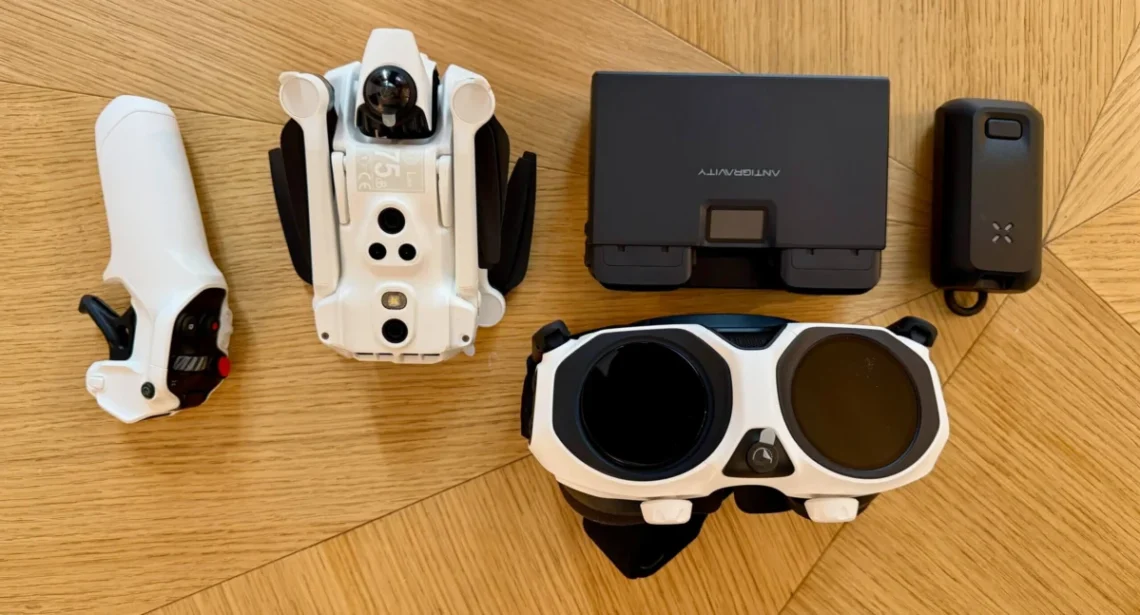
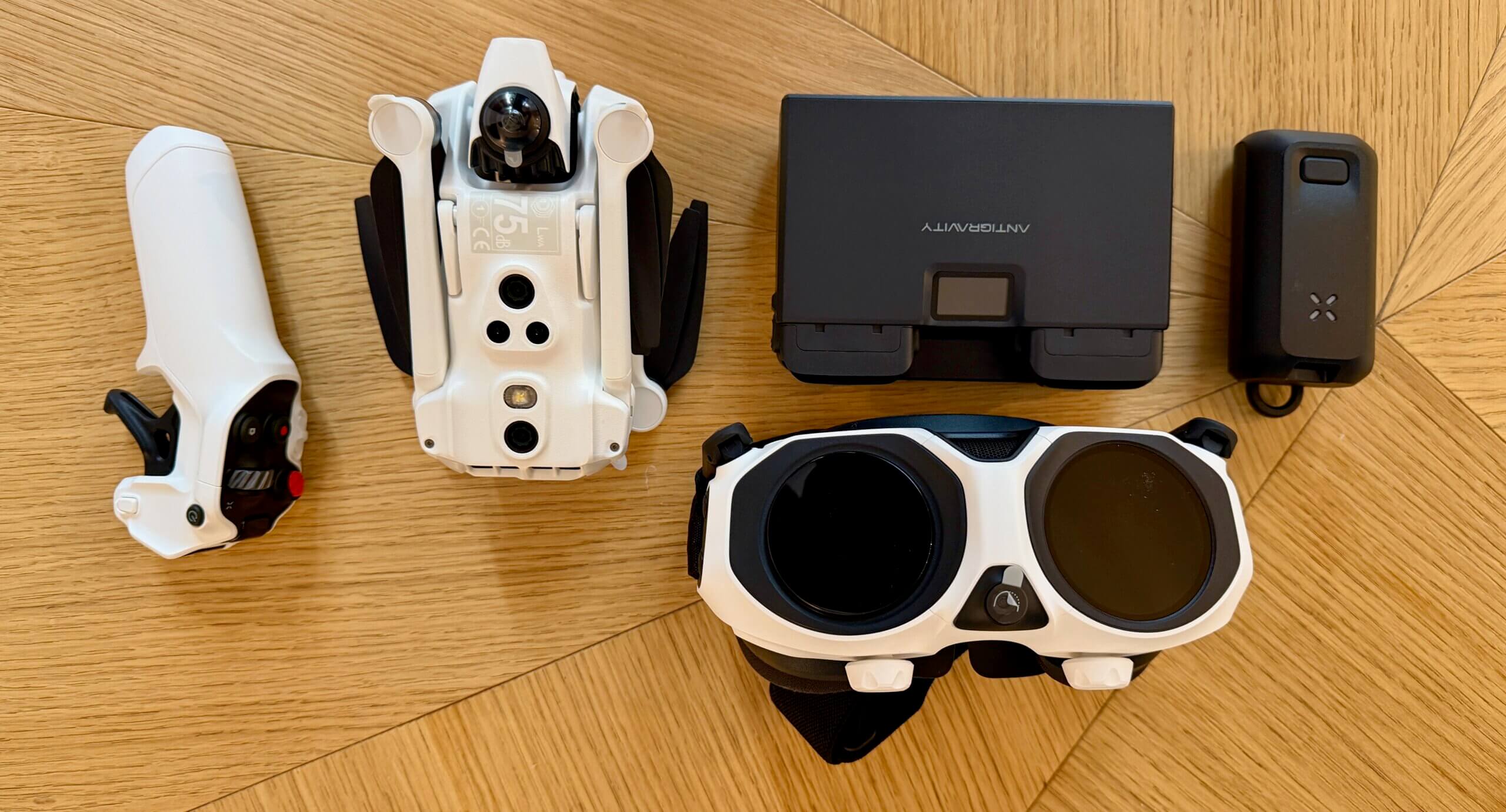
Piloting the A1 feels distinctly futuristic thanks to the accompanying Vision Goggles. These lightweight headsets house dual 4K micro-OLED displays boasting a lightning-fast 120Hz refresh rate. Latency is virtually non-existent, and integrated head tracking changes the game entirely. Because the drone records everything in all directions, turning your head to the left pans the digital field of view to the left. Looking down reveals the terrain passing directly beneath the craft, generating an immersive sense of spatial presence impossible to achieve with a fixed-lens monitor.
For steering, the A1 relies on a single-handed motion controller. Pointing the controller dictates the flight path, while pulling a trigger accelerates the craft. Tilting your wrist banks the drone, and raising the nose initiates a climb. Novices can master complex cinematic sweeps within minutes. However, for professional FPV pilots who demand traditional manual acrobatic control, the A1 also supports standard "Mode 2" stick controllers.
Camera Performance and Reframing
A common point of confusion for consumers is the term "8K Resolution" in 360-degree cameras. On a standard 16:9 camera, 8K packs every pixel into a rectangular frame. On a 360 camera, those pixels are stretched across an entire sphere. When a creator "reframes" that sphere into a flat 16:9 video for YouTube or Instagram, they are essentially viewing a cropped window of the total image.
Despite this crop, the output is stunning. The color science features a punchy "Vivid" profile for instant social media sharing, alongside a professional 10-bit "Log" profile for color grading suites. Stabilization is handled by Antigravity’s proprietary "FlowState" algorithms. Even when flying through 20mph crosswinds, the footage remains as steady as if mounted on a heavy studio tripod.
Battery Metrics and Cinewhoop Mechanics
Battery life remains the primary bottleneck for all compact drones. The A1’s standard Intelligent Flight Battery is rated for 24 minutes of flight time, though real-world testing in moderate winds yields closer to 19 to 20 minutes.
However, the "work per minute" metric heavily favors the A1. Because pilots do not need to re-fly a complex flight path to capture multiple angles, a single 20-minute flight yields exponentially more usable, multi-directional footage than multiple flights with a traditional camera drone. For those prioritizing endurance, the optional "Pro Battery" pushes flight time to a remarkable 39 minutes—though it pushes the total weight past the 250-gram mark, sacrificing ultra-light regulatory perks.
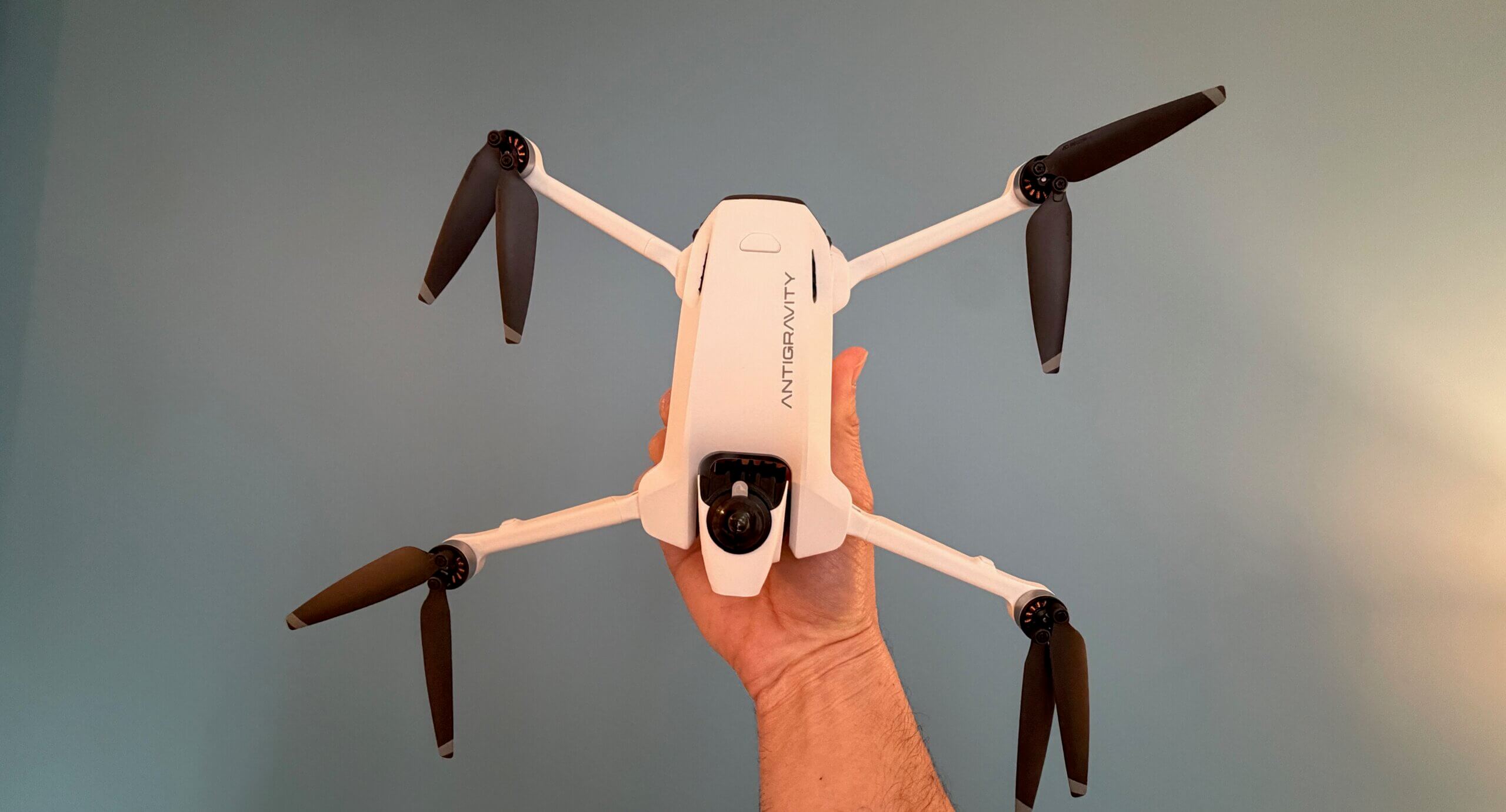
Operating as a "cinewhoop" style flyer, the A1 prioritizes stability and predictability over aggressive racing agility. With a top speed of roughly 36 mph, it easily tracks moving subjects like cyclists or automobiles. Furthermore, features like "Turtle Mode"—which allows the drone to automatically flip itself upright using its propellers after a crash—save pilots from the dreaded "walk of shame" to recover an inverted aircraft.
Official Responses and Industry Reactions
The reception from the broader tech and videography sectors has been overwhelmingly fascinated, if occasionally cautious.
Major competitor brands have publicly downplayed the necessity of 360 capture in the air, arguing that the optical degradation caused by digital reframing compromises ultimate sharpness compared to native 4K or 6K single-lens sensors. Traditional cinematographers have echoed these sentiments, noting that stitching lines can occasionally appear in highly complex lighting environments or when airborne particles cross too close to the lens interface.
Conversely, independent creator communities and travel influencers have championed the Antigravity A1. Representatives from major adventure travel collectives have noted that the device eliminates the anxiety of missing a shot due to sudden wildlife movements or unexpected subject paths. As one prominent travel vlogger summarized: "When you don’t have to fly the camera and frame the shot at the same exact time, your creative bandwidth triples."
Implications: The Future of Aerial Travel Content
The introduction of the Antigravity 360 A1 signals a broader shift in how media is consumed and produced. By democratizing complex aerial maneuvers and removing the physical constraints of mechanical gimbals, the technology lowers the barrier to entry for amateur travelers while offering seasoned professionals a new narrative tool.
As virtual reality, spatial computing, and immersive video formats gain mainstream traction, the demand for spherical, interactive content will only accelerate. The A1 is not merely a novelty; it is an early blueprint for the future of digital storytelling. For creators tired of repetitive, linear drone angles, the Antigravity A1 proves that the sky is no longer a limit—it is simply a canvas waiting to be framed later.