Main Facts: Redefining the Summer Staple
In the landscape of American culinary discourse, few figures command as much respect for "from-scratch" authenticity as Deb Perelman of Smitten Kitchen. Known for demystifying complex processes—ranging from homemade cream cheese to Bronx-style bagels—Perelman recently pivoted to a more accessible, yet technically refined, approach to a quintessential summer icon: the hot dog.
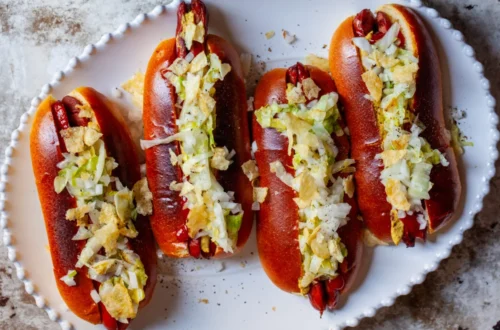
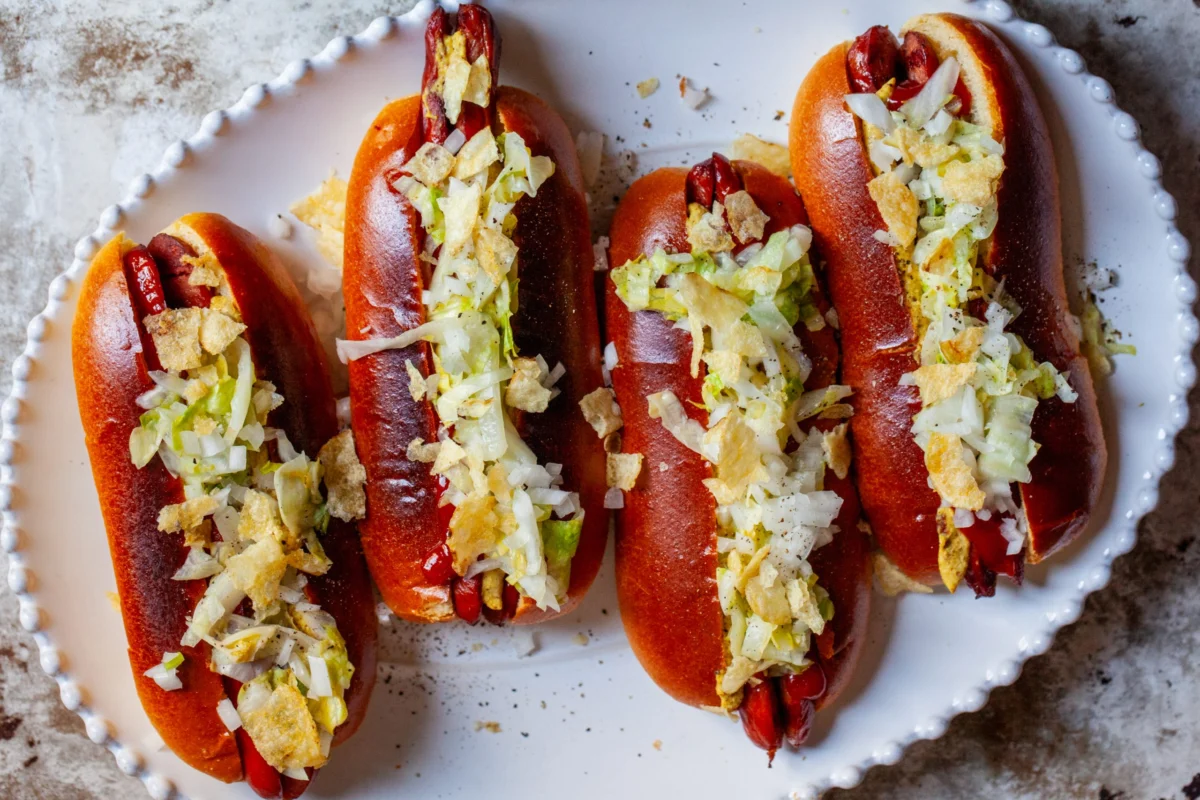
The core of this culinary update is not the creation of the sausage itself, but a sophisticated layering of textures and temperatures. The recipe, titled "Hot Dogs with Vinegared Iceberg and Potato Chips," introduces three primary innovations to the standard backyard fare:
- The Butterfly Technique: Splitting the hot dog longitudinally to maximize surface area for browning.
- Acidic Contrast: Utilizing "vinegared" or quick-pickled iceberg lettuce to provide a bright, cold crunch against the fatty, warm protein.
- Global Topping Fusion: Integrating crushed potato chips, a technique rooted in Latin American street food traditions, to provide a salt-forward, structural crunch.
This development comes at a time when a "heat dome" has settled over the Eastern United States, prompting a shift from outdoor grilling to indoor, stovetop preparations. Furthermore, the release of the recipe coincided with a significant 4.8 magnitude earthquake in Venezuela, leading to a call for humanitarian support through organizations like World Central Kitchen (WCK).

Chronology: From German Origins to Digital Kitchens
The trajectory of the hot dog—from the 19th-century German "frankfurter" to the modern gourmet "glizzy"—reflects the broader evolution of American food culture.
The Early Era (1860s–1920s)
The hot dog’s journey began with German immigrants in New York City, most notably Charles Feltman, who began selling sausages in rolls on Coney Island in 1867. By the early 20th century, the hot dog had become the definitive food of the American working class, prized for its portability and low cost.
The Standardization Period (1930s–1980s)
During the mid-20th century, brands like Hebrew National (referenced by Perelman as the "experts" in meat emulsion) standardized the all-beef frankfurter. The toppings remained largely regional: the sauerkraut and mustard of New York, the "dragged through the garden" style of Chicago, and the chili-laden "Coney" of the Midwest.

The Rise of the Digital Home Cook (2006–Present)
The launch of Smitten Kitchen in 2006 marked a shift in how Americans approached these staples. Perelman’s philosophy emphasized that while many things could be made at home (vanilla extract, fig newtons), the modern cook must choose their battles. This brings us to the present day, where the focus has shifted from the manufacture of the meat to the architectural integrity and flavor profile of the final assembly.
Supporting Data: The Science of Texture and Flavor
To understand why this specific recipe has resonated with culinary enthusiasts, one must look at the chemical and physical principles of the "Butterfly and Crunch" method.
The Maillard Reaction and Surface Area
The decision to "butterfly" a hot dog—slicing it nearly in half and pressing it flat—is not merely aesthetic. By opening the casing, the cook exposes the interior of the sausage directly to the heat source (griddle or pan). This significantly increases the surface area available for the Maillard reaction, the chemical reaction between amino acids and reducing sugars that gives browned food its distinctive flavor. A standard cylindrical hot dog only makes contact with the pan on a narrow strip; a butterflied hot dog achieves a 200-300% increase in crisp, caramelized surface area.

The "Pickle" Variable
Iceberg lettuce is often maligned for its high water content and lack of nutritional density. However, in the context of a rich, salty hot dog, these attributes are assets. By submerging the lettuce in a solution of water, vinegar, salt, and sugar for 30 minutes to 24 hours, the cook creates a "quick pickle." Data suggests that the human palate perceives "deliciousness" through a balance of salt, fat, acid, and heat. The vinegared iceberg provides the necessary acidity to cut through the fat of the beef and the sweetness of the bun.
The Latin American Influence
The inclusion of potato chips or "potato sticks" is a hallmark of Venezuelan, Colombian, and Brazilian hot dog styles (often referred to as perros calientes). In these regions, hot dogs are often maximalist creations featuring pineapple sauce, crushed chips, and even quail eggs. The "crunch factor" provided by potato chips offers a textural contrast that soft buns and processed meats lack.
Official Responses: Culinary Ethics and Humanitarian Crisis
The publication of this recipe triggered two distinct types of responses: one regarding the "from-scratch" ethics of modern cooking, and another regarding the global responsibility of digital influencers.

The Boundary of "Homemade"
Perelman’s admission that she leaves the "grinding of meat with spices and curing agents" to experts sparked a wider conversation about the limits of DIY cooking. Professional charcutiers and food historians note that the emulsion required for a hot dog—a "smooth, fine emulsion" of fat and protein—is notoriously difficult to achieve in a home kitchen without specialized equipment. The "official response" from the culinary community has largely been one of agreement: the "Smitten Kitchen" ethos is about empowerment through quality, not necessarily through exhaustive labor.
The Humanitarian Connection
Following the 4.8 magnitude earthquake in Venezuela, the culinary world responded with a call for aid. World Central Kitchen (WCK), founded by Chef José Andrés, became the primary vehicle for this response.
- Official Statement from WCK: "Our teams are on the ground, navigating catastrophic conditions to provide hot meals to first responders and survivors. In times of crisis, a hot meal is more than just nourishment; it is a sign that the world has not forgotten."
The integration of a donation link within a recipe post demonstrates the evolving role of the "food influencer" as a bridge between domestic comfort and global activism.
Implications: The Future of Seasonal Cooking in a Changing Climate
The context of this recipe—a "heat dome" descending on the Eastern US—highlights a significant shift in summer cooking habits. As triple-digit temperatures become more frequent due to climate change, the "Great American Tradition" of outdoor grilling is being challenged.

The Indoor Pivot
The recommendation to use a kitchen griddle or pan instead of an outdoor grill is a pragmatic response to extreme weather. This suggests a future where "summer food" is defined by its flavors (smoky, grilled, fresh) rather than the physical act of standing over a charcoal flame. The "Happy cook = happy everyone" mantra reflects a growing awareness of kitchen ergonomics and heat management.
The "New Classic"
By combining the New York all-beef tradition with Venezuelan-style toppings and a refined French-style quick-pickle, the Smitten Kitchen hot dog represents a "New Classic." It implies that American cuisine is increasingly a "remix culture," where the best elements of regional and international street foods are distilled into accessible home recipes.
Conclusion: More Than a Recipe
Ultimately, the transition of a humble hot dog into a subject of professional journalistic inquiry reveals the depth of our relationship with food. It is an intersection of chemistry (the Maillard reaction), history (immigration patterns), and social responsibility (disaster relief). Whether it is the structural benefit of a butterflied frank or the moral imperative to support earthquake victims, the modern meal is no longer consumed in a vacuum. It is a calculated balance of heat, crunch, acidity, and empathy.