By Olivia Rosane and Cristen Hemingway Jaynes
Methane is a silent, invisible force—found in the depths of wetlands, the digestive tracts of livestock, and the leaking infrastructure of our fossil fuel economy. While carbon dioxide (CO2) often dominates the climate conversation, methane has quietly become the second most significant contributor to the global climate crisis. Because it is a potent greenhouse gas with a shorter atmospheric lifespan than CO2, methane represents both a daunting challenge and a critical lever for rapid climate intervention.
Quick Key Facts
- Atmospheric Potency: Over a 20-year period, methane traps 86 times more heat than CO2.
- Current Concentrations: Methane levels in the atmosphere have soared by 265% since pre-industrial times, reaching 1,934 parts per billion (ppb) by 2023.
- The 2030 Goal: The IPCC calculates that global methane emissions must fall by 34% by 2030 to keep the 1.5°C temperature target within reach.
- Human Contribution: Roughly 60% of all atmospheric methane is directly linked to human activity, primarily agriculture, fossil fuels, and waste management.
Chronology: The Rise of a Greenhouse Giant
The presence of methane in the atmosphere is not new, but the rate of its accumulation has accelerated dramatically since the Industrial Revolution.

- Pre-Industrial Era: Atmospheric methane levels remained relatively stable, with natural sources—primarily wetlands and microbial processes—largely balanced by natural sinks like soil and the troposphere.
- 18th–20th Century: The expansion of industrial coal mining, the mass production of livestock, and the rise of natural gas infrastructure introduced unprecedented volumes of methane into the cycle.
- 2021 (COP26): In a landmark move, the UK and the U.S. launched the Global Methane Pledge. To date, 159 nations have signed on, committing to a 30% reduction in methane emissions by 2030.
- 2023–2025: Despite international pledges, record-breaking atmospheric concentrations continue to be recorded. Scientists observe "super-emitter" events—localized, massive leaks—through satellite technology, highlighting a significant "implementation gap" between political promises and industrial reality.
Supporting Data: Measuring the Invisible
Methane measurement is a complex scientific endeavor that relies on two distinct paradigms: "bottom-up" and "top-down" assessments.
The Measurement Divide
Bottom-up methods involve ground-level calculations, such as multiplying the average emissions of a single cow by the total number of cattle in a region. While useful, these models often fail to account for "super-emitters"—the 5% of leaks responsible for over 50% of total gas-industry leakage.
Top-down methods utilize satellites and aircraft to measure atmospheric concentrations directly. These data points have repeatedly revealed that actual methane emissions from oil and gas operations are significantly higher than official EPA inventories—in some cases, by as much as 60%. As satellite technology becomes more precise, it is exposing the hidden scale of fugitive emissions from landfills, coal mines, and pipelines.

The Potency Equation
Methane’s climate impact is defined by its intensity and brevity. While CO2 lingers for centuries, methane survives for roughly 12 years. This creates an immediate "climate shock." Reducing methane today provides an almost instant "cooling" effect, offering the greatest potential to slow global heating over the next two decades.
The Primary Drivers of Methane
Methane sources are broadly categorized into human-induced and natural origins.
Agriculture: The Leading Human Source
Agriculture accounts for approximately 40% of human-caused methane. Enteric fermentation—the digestive process of ruminants like cows and sheep—is the largest sub-sector. Additionally, rice paddies, which create anaerobic environments for methane-producing microbes, contribute about 8% of human-caused emissions.

Fossil Fuels: The "Bridge Fuel" Fallacy
Fossil fuels contribute 35% of human-caused methane. The industry has long branded natural gas as a "bridge fuel," arguing that it is cleaner than coal. However, this argument ignores the massive quantities of methane that leak during extraction, processing, and transport. Current data suggests that if even 0.2% of methane leaks during the life cycle of liquefied natural gas (LNG), it negates any climate benefit over coal.
Landfills and Waste
Waste management accounts for 20% of human-caused methane. As global populations rise, the volume of solid waste is projected to increase by 73% by 2050. Without a shift toward circular, zero-waste economies, this sector is expected to grow faster than any other source of methane emissions.
Official Responses and Political Implications
The international response has been characterized by high-level diplomatic pledges but sluggish enforcement. The Global Methane Pledge is a vital framework, yet as of 2023, only 13% of all global methane emissions were covered by specific, enforceable reduction policies.

The Department of Energy and international bodies like the IEA have noted that the "low-hanging fruit" of the fossil fuel industry—such as fixing leaks and stopping intentional venting—could slash sector emissions by 70% using existing technology. Yet, the continued buildout of LNG export terminals, particularly in the U.S., Australia, and Canada, threatens to lock in decades of emissions that directly contradict the goals set forth in the Paris Agreement.
Implications: A Tipping Point in the Balance
The most alarming concern for climatologists is the "positive feedback loop." As the planet warms, natural methane sinks are being overwhelmed.
The Wetland Methane Feedback
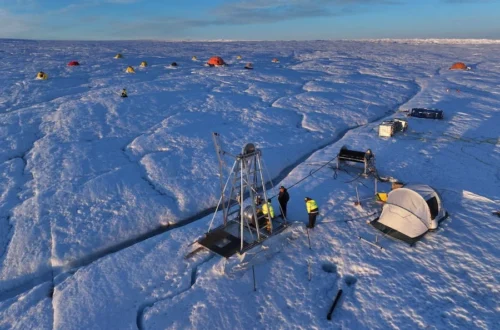
Tropical wetlands and Arctic permafrost are increasingly releasing methane as temperatures rise. As permafrost thaws, it releases trapped organic matter and methane hydrates. Because the Arctic contains 2.5 times more carbon than is currently in the atmosphere, this represents a major climate tipping point. If these systems cross a certain threshold, the release of methane could become self-sustaining, independent of human intervention.

Public Health and Ozone
Methane is not just a climate issue; it is a public health crisis. It acts as a precursor to ground-level ozone, a toxic pollutant that damages human lung tissue and crops. Reducing methane emissions is estimated to prevent nearly half a million premature deaths annually, alongside billions of dollars in crop losses from ozone damage.
Pathways to Mitigation
The path forward requires a three-pronged approach:
- Systemic Transformation: We must pivot away from fossil fuel reliance toward renewable energy. This includes halting the expansion of LNG infrastructure, which is currently cancelling out domestic climate progress.
- Agricultural Innovation: We can reduce livestock emissions through better feed (including methane-inhibiting seaweed), improved manure management, and a societal shift toward more plant-based diets. Implementing "Alternative Wetting and Drying" for rice cultivation can also halve methane output in the agricultural sector.
- Individual and Local Action: While systemic change is paramount, individuals can influence the trajectory by reducing food waste, composting, and replacing gas appliances (stoves and furnaces) with electric heat pumps and induction technology. At the community level, joining organizations that campaign against the expansion of "methane bombs" is essential for shifting political will.
The Final Takeaway
Methane emissions present a unique duality: they are a dangerous accelerant of the climate emergency, yet they are also our most effective tool for immediate, short-term mitigation. By prioritizing the reduction of methane—fixing industrial leaks, reforming our food systems, and halting new fossil fuel infrastructure—we can significantly dampen the rate of global warming. The climate crisis is a result of complex, profit-driven systems; dismantling them requires a coordinated effort to force transparency, hold corporations accountable, and align our daily choices with the urgent necessity of a cooling planet. The window to act is narrow, but the potential for meaningful impact remains high.