Main Facts
As the autumn season settles in, home cooks are increasingly turning to quick, comforting, and low-cleanup meals that do not sacrifice flavor or culinary satisfaction. Food writer and cookbook author Deb Perelman of Smitten Kitchen has introduced a game-changing weeknight solution that turns traditional comfort food on its head: Skillet Pierogi with Mushrooms and Caramelized Onions.
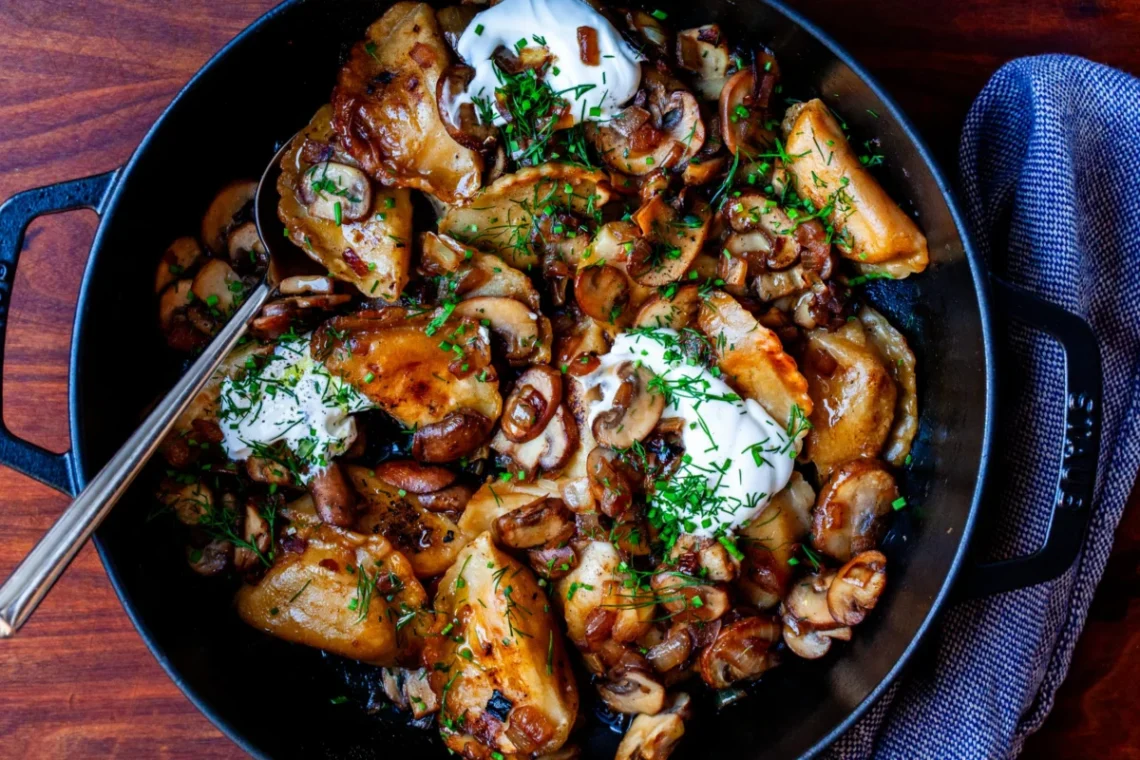
Rather than utilizing the conventional, labor-intensive method of boiling pierogi before sautéed finishes, this innovative one-pan recipe turns frozen dumplings straight into the skillet. By combining almost-caramelized onions, earthy garlicky mushrooms, and direct-from-frozen pierogi cooked via a strategic steam-and-fry method, the dish achieves a delicate balance of textures—partly crispy, partly chewy dough encasing soft, fluffy potato centers.
Finished with a bright dash of white vinegar, rich dollops of sour cream, and a generous fistful of fresh dill and chives, this meal delivers complex, gourmet-level flavors in under 30 minutes. Requiring inexpensive grocery store ingredients and leaving behind a minimal cleanup footprint—just one pan, a cutting board, a fork, and a knife—the recipe has quickly become a blueprint for efficient, high-reward autumn cooking.

Chronology of the Dish: From Cravings to One-Pan Perfection
The conceptualization and execution of the skillet pierogi recipe align closely with the hectic realities of modern family life during the peak of the fall season.
- The Fall Seasonal Shift: Despite a relatively warm and mild autumn meteorologically, seasonal psychological triggers prompt intense cravings for carbohydrates, caramelized aromatics, and hearty, earthy vegetable skillets.
- The Time Crunch: Concurrently, households face peak scheduling congestion. Between managing college applications, navigating middle school adjustments, and writing an upcoming cookbook, time management dictates meal preparation. Complicated multi-pot dinners are systematically eliminated in favor of streamlined approaches.
- The Culinary Pivot: Traditional pierogi preparation demands a two-step process: boiling the dumplings in water until they float, draining them, and then transferring them to a skillet to brown in butter or oil. Perelman’s method reverses and simplifies this sequence entirely.
- Phase One (The Aromatics): A large, deep skillet is heated over medium-high heat with butter and olive oil. Sliced onions are introduced, seasoned, and cooked until they reach a near-caramelized state with golden edges. Minced garlic is added for a brief minute, followed by sliced mushrooms that are left unstirred to achieve a deep, savory brown crust before being temporarily set aside.
- Phase Two (The Dumplings): The same skillet receives a touch more oil, and frozen pierogi are arranged in a single layer. Once the bottoms achieve a golden-brown crispness, they are flipped. Water is carefully added to the pan, creating an immediate steam reaction, and the skillet is quickly covered with a lid.
- Phase Three (The Steam-Cook): Operating over medium heat, the trapped steam thoroughly cooks the frozen potato filling and tenderizes the dough within 5 to 8 minutes.
- Phase Four (The Assembly and Finish): The reserved mushrooms and onions return to the pan to rewarm. The heat is cut, and the dish is elevated with a balancing splash of white vinegar, cooling dollops of sour cream, and fresh herbs, culminating in a dish ready to be served straight from the pan.
Supporting Data: Efficiency, Economics, and Culinary Metrics
An analysis of the Skillet Pierogi with Mushrooms recipe highlights why it functions as a model for modern weeknight cooking, balancing time, cost, and nutritional satisfaction.
Time and Labor Breakdown
- Total Preparation and Cooking Time: Under 30 minutes.
- Active Cook Time: Approximately 15 minutes.
- Steaming Time: 5 to 8 minutes.
- Cleanup Footprint: Minimalist. The dish utilizes precisely one deep skillet with a lid, one cutting board, and standard eating utensils, drastically reducing post-meal labor compared to traditional pasta or dumpling dishes that require stockpots, colanders, and multiple mixing bowls.
Ingredient Economics
- Core Base: Commercially available frozen pierogi (budget-friendly, shelf-stable, and universally accessible).
- Produce: Yellow onions, fresh garlic, and white button or cremini mushrooms—staples that remain inexpensive year-round.
- Pantry Finishers: Butter, olive oil, salt, pepper, and white vinegar (a pantry hero frequently championed by culinary experts for its ability to cut through heavy starches and fats).
- Fresh Dairy and Herbs: Sour cream, fresh dill, and chives, which inject vibrancy and a necessary temperature contrast into the piping-hot skillet.
Comparative Efficiency Analysis
| Culinary Metric | Traditional Boiled-then-Sautéed Pierogi | One-Skillet Steamed-Crisp Pierogi |
|---|---|---|
| Equipment Used | Stockpot, colander, skillet, multiple bowls | Single deep skillet with lid, cutting board |
| Water Consumption | High (full pot of boiling water) | Minimal (just enough to generate steam) |
| Texture Profile | Uniformly soft with lightly pan-fried edges | Crispy-chewy exterior with soft, fluffy interior |
| Active Monitoring | Requires watching boiling water and transferring items | Integrated one-pan steam-fry method |
Official Responses and Culinary Perspectives
The reception of the skillet pierogi method within the broader culinary community highlights a growing appreciation for reimagining convenience foods. Professional chefs, food media outlets, and home cooking advocates have increasingly embraced recipes that bridge the gap between packaged grocery convenience and scratch-cooking flavor.

In her recent feature in New York Magazine’s The Strategist, Deb Perelman emphasized the irreplaceable role of pantry essentials—specifically spotlighting white vinegar—in elevating humble ingredients into dynamic culinary experiences. The application of acid to rich, carbohydrate-heavy dishes acts as a necessary palate cleanser, cutting through the dense starch of the potato and the heavy richness of butter and sour cream.
Culinary historians and home-cooking enthusiasts have also noted the cultural versatility of the dish. While commercial frozen pierogi are a staple of Polish-American cuisine, the technique mirrors cross-cultural traditions of dumpling pan-frying and steaming (such as Japanese gyoza or potstickers). Furthermore, Perelman acknowledges the historical lineage of the dish, noting that while pierogi are widely recognized, her personal preference often leans toward traditional Ukrainian vareniki, which feature a thinner, more delicate dough and smaller proportions.
Other prominent food bloggers and recipe developers have echoed the sentiment, pointing out that frozen carbohydrate bases—ranging from frozen tortellini to ravioli—represent an untapped frontier for fast, sophisticated weeknight dinners. Previous hits in this category, such as Crispy Tortellini with Peas and Prosciutto and Skillet Ravioli with Spinach, have laid the groundwork for this culinary movement, proving that home cooks are eager to bypass complex dough-making without sacrificing elevated dining experiences at home.

Implications for the Modern Home Cook
The viral and practical success of recipes like Skillet Pierogi with Mushrooms carries several broader implications for how contemporary households approach meal planning, grocery budgeting, and culinary satisfaction.
1. The Redefinition of "Convenience Foods"
For decades, convenience foods—particularly frozen meals—carried a stigma of compromise, often associated with processed flavors, poor nutritional balance, or lackluster textures. Recipes that intelligently combine frozen staples with fresh, high-impact aromatics (like caramelized onions and fresh herbs) shatter this paradigm. They demonstrate that convenience products can serve as a legitimate, high-quality canvas for creative home cooking.
2. Streamlining the Cognitive Load of Cooking
The psychological barrier to cooking after a long workday—often referred to as "dinner fatigue"—is heavily influenced by the anticipated cleanup. By reducing the physical equipment footprint to a single skillet, recipes like this lower the threshold for cooking at home rather than ordering takeout. This efficiency is especially vital during high-stress periods, such as the autumn academic and professional crunch.

3. Democratizing Gourmet Comfort
Inflation and rising grocery costs have forced many consumers to reevaluate dining habits, scaling back on restaurant visits in favor of home-cooked meals. Comfort food recipes built around inexpensive base ingredients—such as potatoes, flour, onions, and mushrooms—offer psychological and physical comfort without placing a heavy burden on household budgets.
Ultimately, the rise of the one-skillet pierogi proves that exceptional meals do not require hours of complex labor or expensive specialty ingredients. By working smarter, not harder, home cooks can reclaim the joy of dinner preparation, turning a busy weeknight into an opportunity for culinary comfort.