By Lydia Price
September 25, 2026
In the modern landscape of luxury travel, the most sought-after experiences are no longer found in the sedentary indulgence of a traditional tour. Instead, a new archetype of traveler has emerged: one who views the exertion of the climb as the essential prelude to the reward of the pour.
The convergence of high-performance cycling and viticulture is a growing phenomenon that marries the thrill of the ride with the sensory complexity of a vineyard tour. The same geographical features that define a challenging cycling route—steep, winding ascents, diverse elevation, and breathtaking vistas—are precisely the conditions that produce the world’s most nuanced wines. As travelers look for more immersive, active, and sustainable ways to explore, the "pedal-and-pour" vacation has become the new benchmark for sophisticated travel.

The Intersection of Sweat and Terroir
The allure of cycling through a wine region lies in the intimacy of the experience. When you travel by car, the vineyard is a destination you arrive at; when you travel by bike, the vineyard is the landscape you inhabit. This shift in perspective allows for a visceral connection to the land.
"Traveling by bike puts you directly into the landscape, riding through vineyards, agricultural areas, villages, and smaller communities," explains Katy Rockett, regional director of North America at the renowned tour operator Explore Worldwide. "There is a much stronger connection between the wine you’re tasting and the place it comes from. You see the soil, the slope, and the climate that defined the bottle in your hand."
The numbers bear this out. Explore Worldwide has reported a 31% year-over-year increase in bookings for their Porto to Lisbon cycling itinerary, while their Lisbon to Algarve route has seen a surge of 40%. This is not merely a seasonal spike; it is a fundamental shift in how affluent, active travelers prioritize their leisure time.

Chronology of a Trend: From Niche Sport to Global Phenomenon
The rise of cycling-wine tourism can be traced through three distinct phases over the last decade:
- The Professional Influence (2015–2019): Increased media coverage of professional cycling races like the Tour de France and the Giro d’Italia—which often weave through iconic wine regions—sparked public interest. Amateur athletes began seeking out these same routes, leading to the first wave of boutique "cycling retreats."
- The Accessibility Revolution (2020–2023): The widespread commercialization of electric bicycles (e-bikes) dismantled the primary barrier to entry: physical ability. Suddenly, non-professional cyclists could conquer the steep inclines of the Douro Valley or the foothills of Mont Ventoux without requiring years of training.
- The Immersive Era (2024–Present): Today, we are in an era of hyper-curated travel. Hotels and wineries are no longer just "accommodating" cyclists; they are designing their entire business models around them, offering specialized storage, nutrition, spa recovery, and guided tours.
Supporting Data: The E-Bike Factor
The integration of electric-assist technology has fundamentally altered the demographic of wine-country cyclists. Dagmar Lombard, general manager of Hôtel Crillon le Brave in southeastern France, notes that the demand for these experiences is driven by a desire for balance.
"Pairing cycling with wine tourism answers a growing demand for immersive, active experiences," says Lombard. "The rise of the electric bike has made it far more accessible—both for exploring the vineyards around us and for taking on a significant challenge like the ascent of Mont Ventoux."

By lowering the physical barrier to entry, e-bikes have transformed wine country from a spectator sport into an inclusive adventure. This has opened the market to couples with varying fitness levels, older travelers, and those who want to focus on the cultural experience rather than just the physical exertion.
Nine Destinations for the Discerning Cyclist
From the rugged slopes of Portugal to the coastal serenity of South Africa, here are nine regions where cycling and winemaking have achieved perfect harmony.
Provence, France: The Epicenter of Provençal Elegance
Provence offers a blend of Roman history and modern luxury. The grueling Mount Ventoux—a legendary fixture of the Tour de France—serves as the ultimate litmus test for serious cyclists. For those seeking a more measured pace, the region is a tapestry of lavender fields and hilltop villages. Properties like Hôtel Crillon le Brave have become pioneers in this space, achieving the Accueil Vélo certification. With secure storage, rental deliveries, and post-ride spa treatments, they cater to the needs of the modern cyclist before they even return to their glass of chilled, mineral-forward rosé.

Douro Valley, Portugal: The Land of Steep Terraces
The Douro Valley is not for the faint of heart. It is a UNESCO World Heritage site defined by extreme gradients and schist-cut slopes. Cyclists here are rewarded with unparalleled views of the winding river and some of the world’s most historic quintas. Symington Family Estates, including the iconic Quinta do Vesúvio, offers a glimpse into 16th-century history. For the cyclist, the promise of a rare vintage Port at the end of a punishing climb is the ultimate incentive.
Stellenbosch and Franschhoek, South Africa: The Cape Winelands Playground
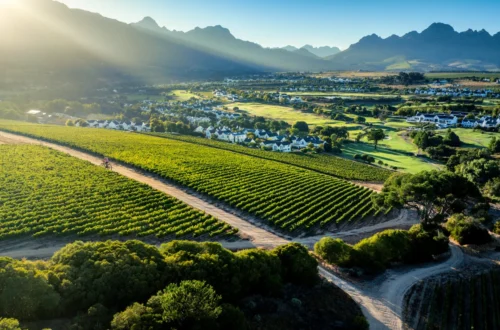
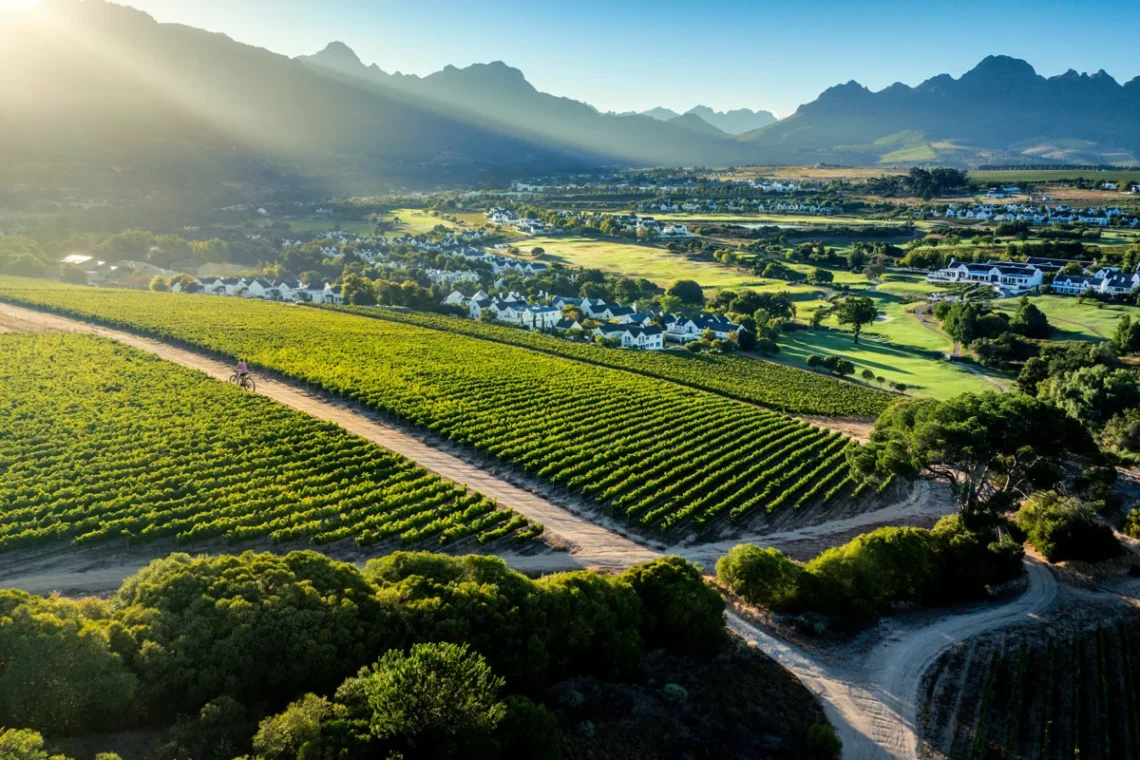
South Africa has cultivated a robust outdoor culture. Stellenbosch offers a dizzying array of road, gravel, and mountain bike trails. The Helshoogte Pass serves as a gateway between the mountains and the more leisurely lanes of Franschhoek. Luxury estates like Delaire Graff and historic wineries like Boekenhoutskloof ensure that the quality of the wine—ranging from bold Cabernet Sauvignon to complex Syrah—matches the high-octane thrill of the ride.
Sonoma Valley, United States: A Diverse American Classic
With 19 distinct AVAs, Sonoma is the antithesis of the "one-size-fits-all" wine region. Its extensive network of bike-friendly roads makes it arguably more accessible than neighboring Napa. Healdsburg serves as a central hub, offering easy access to the quiet, rolling hills of Dry Creek Valley. A stop at Lambert Bridge for a curated picnic in their gardens provides the perfect mid-ride reprieve before sampling the world-class Rieslings at Reeve Wines.

Loire Valley, France: The Epicurean’s Route
The La Loire à Vélo trail is a 560-mile masterpiece of infrastructure. While the main route is a gentle traverse of riverside villages and Renaissance châteaux, the detour into the Cotes d’Auvergne AOC offers a rugged, volcanic landscape. Pairing a visit to producers like Desprat Saint Verny with a ride through these ancient, mineral-rich soils creates a link between Roman-era winemaking traditions and modern athletic exploration.
Barossa Valley, Australia: The Sealed Path to Perfection
The Barossa Trail is a masterclass in regional planning. This 25-mile sealed path allows cyclists to navigate the heart of Australia’s wine country with ease, utilizing well-placed water stations and public amenities. The Gomersal Trail connects riders to the historic Seppeltsfield Wines, where the 100-point red blends offer a world-class reward for an easy day of pedaling under the expansive Southern Hemisphere sky.
Girona and the Empordà, Spain: The Catalan Cycling Hub
Girona has long been the training ground for professional cyclists, but its secret is the proximity to the DO Empordà. Riders can cycle through ancient cork forests and medieval villages before tasting the region’s signature Garnatxa Negra. The Pirinexus loop offers some of the most diverse terrain in Europe, bridging the gap between Mediterranean coastal routes and the foothills of the Pyrenees.

Willamette Valley, United States: The Scenic Bikeway
Oregon’s 134-mile Scenic Bikeway is the gold standard for state-sponsored cycling infrastructure. Passing through the fertile valley between the Coast and Cascade ranges, the route is a quiet, meditative journey through hazelnut orchards and hop fields. Stops like Ankeny Vineyard allow riders to sample the Willamette’s world-renowned Pinot Noir while overlooking the very vines that produced it.
Tuscany, Italy: The Spiritual Home of the Ride
Tuscany’s white gravel roads (strade bianche) are iconic, lined with cypress trees and centuries of winemaking history. With over 9,000 miles of routes, the region caters to every level of athlete. Whether you are traversing the gentle paths of the Via Francigena or tackling the arduous climb toward San Pellegrino, the reward—a glass of Chianti Classico—is as timeless as the landscape itself.
Implications for the Future of Travel
The rise of this niche market has profound implications for both the tourism and agricultural sectors.

Sustainability: By promoting cycling, regions are naturally encouraging a lower carbon footprint for their visitors. Furthermore, the "slow travel" movement—where tourists stay longer in one region to explore by bike—benefits local economies more than transient, high-volume tourism.
Infrastructure Investment: Wineries are increasingly investing in "cyclist-first" infrastructure. This goes beyond basic bike racks; we are seeing the development of charging stations for e-bikes, specialized route maps, and even luggage transfer services between estates.
Market Diversification: For the wine industry, this demographic represents an ideal consumer: educated, affluent, and interested in the narrative of the product. By providing a memorable, active experience, wineries are creating brand loyalists who associate a specific bottle with the physical joy of a day spent on two wheels.

As we look toward the future, the integration of physical activity and luxury viticulture is set to continue its upward trajectory. For the modern traveler, the best way to understand the soul of a wine is to experience the contours of the land that birthed it—one pedal stroke at a time.