Main Facts
In the vast landscape of culinary blogging, few recipes achieve genuine legendary status. Among them is the quintessential strawberry shortcake—a dessert that historically bridged the gap between heavy, biscuit-based winter pastries and light, refreshing summer fruit dishes. Recently, popular food writer and recipe developer Deb Perelman, the creative force behind Smitten Kitchen, officially released a thoroughly modernized, streamlined version of her 2007 Strawberry Chiffon Shortcake.
The updated recipe, titled "Strawberry Chiffon Shortcake, Perfected," represents a nearly two-decade evolution in baking science, home kitchen practicality, and dessert aesthetics. Originally published when the blog was in its infancy, the original chiffon cake called for a notoriously finicky assembly line of specialized ingredients, including cake flour, superfine sugar, cream of tartar, and a tedious distribution of uneven egg whites and yolks across multiple mixing bowls. Furthermore, classic chiffon cakes carried a reputation for being stiff, overly lean, and prone to collapsing or dipping in the center during the cooling process.

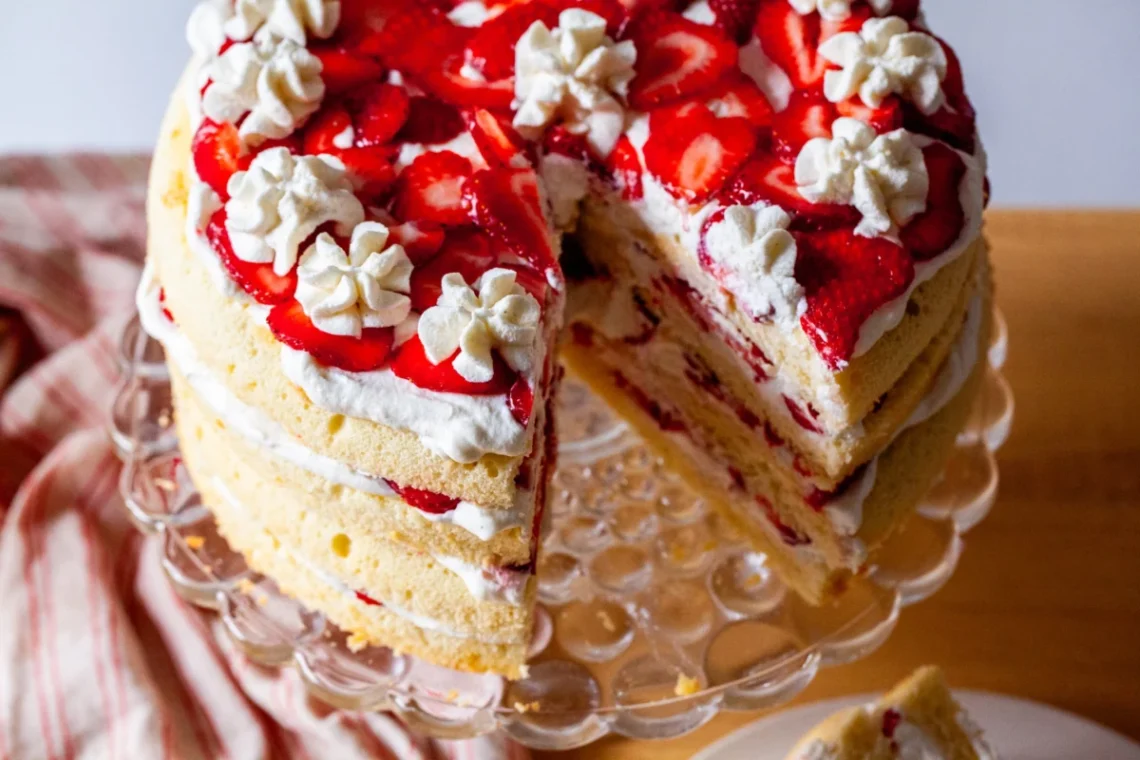
The 2026 iteration strips away these administrative and technical hurdles while preserving the dessert’s signature attribute: a cloud-like, featherweight crumb. Built from two round cake layers cut horizontally to yield a four-tier masterpiece, the updated shortcake layers are intercalated with generous blankets of vanilla-infused whipped cream, sour cream, and fresh summer strawberries. According to initial testing and celebratory serving trials—including a supersized four-layer version baked for Perelman’s recent birthday—the dessert vanishes almost instantaneously, prompting rave reviews from guests who describe it as a "weightless, melt-in-your-mouth" culinary triumph.
Beyond its immediate textural success, the perfected recipe addresses a major pain point for home bakers: longevity. While traditional whipped cream cakes tend to sog and degrade within hours, the modified chiffon sponge and stabilization method allow the assembled cake to maintain its structural and sensory integrity for up to six days in refrigeration, effectively revolutionizing make-ahead entertaining.

Chronology of a Recipe: From 2007 to 2026
To understand the magnitude of this recipe revision, one must trace the timeline of Perelman’s relationship with chiffon baking, which mirrors the broader evolution of home cooking over the last twenty years.
- June 2007: The original "Layered Strawberry Chiffon Shortcake" debuts on Smitten Kitchen. Built for a friend’s rooftop birthday barbecue, the recipe introduces many home bakers to the physics of chiffon cakes—cakes that combine the vegetable oil of traditional quick breads with the whipped egg white foam of angel food cakes. Despite its success at the party, the author remains lukewarm on the format due to its high-maintenance ingredient list and rigorous preparation demands.
- The Intervening Years (2007–2025): Throughout nearly two decades of recipe development, chiffon cakes occasionally surface in editorial backlogs under queues labeled "Could Use a Refresh." During this period, Perelman undergoes what she lightheartedly dubs her "Chiffon Cake Era," gradually falling in love with the specific chemistry of the sponge. She notes that unlike dense butter cakes or delicate sponge cakes that dry out overnight, chiffon structures exhibit remarkable shelf-stability, retaining their bounce and moisture days after baking.
- Late Spring 2026: The recipe officially undergoes a comprehensive overhaul. The focus shifts entirely to eliminating kitchen friction—reducing the number of specialized pantry items, streamlining bowl management, and engineering fail-safe cooling techniques to counteract the historical tendency of chiffon centers to cave inward.
- Friday, June 2026: A supersized, four-layer, 9×13-inch version of the perfected cake serves as the centerpiece for Perelman’s birthday celebration. True to form, the cake undergoes an impromptu stress test when guests bypass traditional plates and utensils, devouring the dessert straight from the serving platters within minutes of its arrival.
Supporting Data and Technical Innovations
Baking is chemistry, and the 2026 refinement of the strawberry chiffon shortcake relies on specific adjustments to ingredient ratios and mechanical handling to achieve its superior outcome.

The Anatomy of the Update
| Metric / Parameter | Original 2007 Method | Perfected 2026 Method |
|---|---|---|
| Flour Type | Specialized cake flour (sifted multiple times) | Standardized adaptation for broader pantry accessibility |
| Sugar Specifications | Superfine sugar required for rapid dissolution | Standard granulated sugar utilized with adjusted whisking times |
| Pan Preparation | Grease and flour entire pan interior | Grease only the bottom; line with parchment; leave sides bare |
| Cooling Protocol | Standard upright cooling on wire racks | Immediate counter-drop followed by inverted cooling on sprayed racks |
| Cream Stabilization | Standard heavy whipping cream | Heavy cream fortified with sour cream or crème fraîche |
| Shelf Life | Best consumed within 24–48 hours | Structurally sound and fresh for up to 5–6 days |
Decoding the Technique
The technical triumphs of the perfected recipe lie in three distinct phases of execution:
- The Yolk Emulsion: By aggressively whisking the egg yolks, lemon zest, and the primary measure of granulated sugar for a full minute, home bakers initiate a mechanical aeration process. Even though the mixture appears dry and stiff initially, prolonged whisking forces the sugar to break down the yolk membranes, yielding a pale, frosting-like ribbon stage without requiring chemical leaveners to do all the heavy lifting.
- The Thermal Shock (Counter Drop): One of the most notorious flaws of chiffon and angel food cakes is post-baking shrinkage, caused by trapped steam contracting as the cake cools. Perelman’s updated protocol instructs bakers to deliberately drop the hot cake pans onto the kitchen counter from a height of several inches the exact moment they emerge from the oven. This sudden physical shock ruptures microscopic air bubbles, stabilizing the internal gluten and egg-foam matrix against collapse.
- Inverted Cooling: To prevent the gravity-induced dipping in the center typical of high-rise cakes, the pans are immediately flipped upside down, resting suspended on greased cooling racks until reaching room temperature.
- Cream Fortification: Traditional whipped cream collapses under the weight of heavy fruit layers and ambient kitchen heat. By incorporating a measured quantity of sour cream or crème fraîche into the whipped heavy cream and powdered sugar base, the fat and acid matrix stabilizes, holding its sculptural integrity without turning grainy or weeping liquid onto the cake layers.
Official Responses and Community Reactions
The culinary community’s response to the updated recipe has been overwhelmingly enthusiastic, highlighting both the emotional resonance of the original 2007 post and the practical brilliance of the modern updates.

Long-time followers of the food site expressed collective relief regarding the elimination of hard-to-find ingredients like superfine sugar and cake flour. Baking enthusiasts on social media forums noted that the revised pan-preparation method—specifically leaving the sides of the pans ungreased—is the secret key to allowing the fragile chiffon batter to "climb" up the walls of the pan during baking, achieving maximum height without tearing during the un-molding process.
At the launch party itself, eyewitness accounts underscored the irresistible nature of the dessert. A party guest officially interviewed about the incident reported that the cake was "a weightless, melt-in-your-mouth dessert" so compelling that conventional etiquette dissolved. Another attendee voiced mock frustration, complaining that because the cake vanished so rapidly into the crowd, she was physically blocked from securing a coveted third helping.

When informed of these testimonies, kitchen observers pointed out that the cake’s airy texture naturally deceives the palate into underestimating its richness, creating an illusion of lightness that encourages repeat consumption.
Implications for Modern Home Baking
The release of the perfected strawberry chiffon shortcake carries several broader implications for contemporary home cooking trends, particularly as culinary enthusiasts balance a desire for bakery-quality results with increasingly busy, modern lifestyles.

1. The Demystification of Pastry Arts
For generations, chiffon cakes were categorized alongside soufflés and laminated doughs as intimidating techniques best left to professional pastry chefs. By systematically dismantling the fussy rules of traditional chiffon baking—such as strict requirements for superfine sugar and hyper-specialized flours—this recipe democratizes high-end baking. It proves that architectural height and ethereal texture can be achieved in a standard home kitchen using standard grocery store staples.
2. Redefining Make-Ahead Dessert Culture
Traditionally, fresh fruit and whipped cream cakes have been strictly classified as "assemble-at-the-last-minute" dishes due to the inevitability of soggy bread and weeping dairy. The 2026 Smitten Kitchen update challenges this paradigm. By engineering a sponge that retains moisture without degrading, and pairing it with a sour-cream-fortified cream that resists breakdown, the recipe opens up new possibilities for meal planning. Bakers can now construct show-stopping centerpieces days in advance of dinner parties, weddings, or summer barbecues without sacrificing quality.

3. The Nostalgia Economy in Food Media
As digital food media approaches its third decade of mainstream web publishing, recipe developers face a unique challenge: revisiting foundational hits without alienating modern audiences. The successful transition of the 2007 chiffon shortcake into a 2026 masterclass demonstrates how culinary platforms can honor their archives while aggressively editing for contemporary tastes. It signals a shift away from performative complexity—where recipes demand excessive labor for the sake of authenticity—toward pragmatic elegance, where every technical step must justify its existence on the plate.
Ultimately, the perfected strawberry chiffon shortcake stands as a testament to the idea that simple foods, executed with precision and updated for real life, will always find an audience eager to bypass the plates and eat straight from the platter.