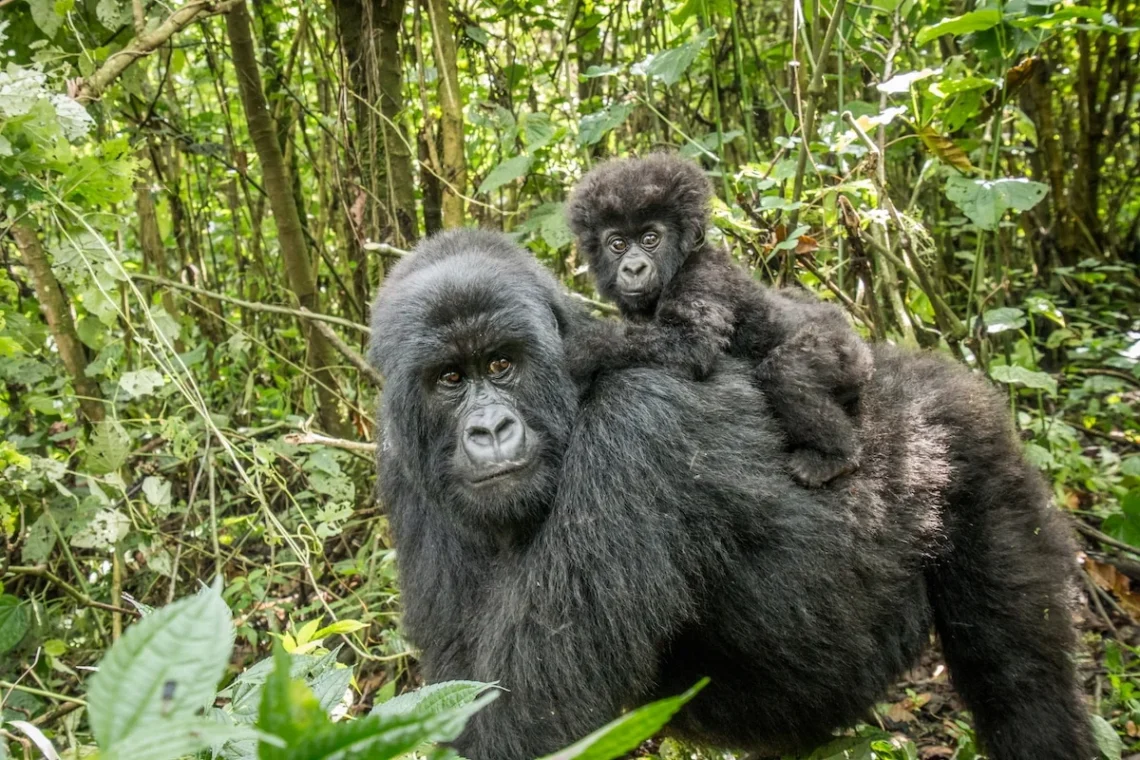
The Democratic Republic of the Congo (DRC) stands at a precarious environmental precipice. As the custodian of the world’s second-largest tropical rainforest, the nation is home to an irreplaceable mosaic of biodiversity—from the iconic mountain gorilla to the elusive bonobo. However, a sweeping new government initiative threatens to dismantle this natural heritage. Recent reports confirm that the DRC is moving to open more than half of its national territory to oil and gas exploration, a decision that experts warn could trigger an ecological catastrophe of global proportions.
According to the comprehensive report Forests to Frontlines: Oil Expansion Threats in the DRC, published by Earth Insight, the government has launched an auction for 52 new oil blocks. These join three previously awarded concessions, effectively placing 64 percent of the country’s pristine forests under the shadow of the drill. This move does not merely threaten local habitats; it imperils the global climate, as the region’s vast peatlands act as one of the Earth’s most critical carbon sinks.
The Magnitude of the Threat: A Statistical Breakdown
The scale of the proposed expansion is staggering. The newly opened oil blocks overlap with some of the most ecologically sensitive regions on the planet. According to the Earth Insight data, the implications for conservation are severe:
- Protected Areas: 20.5 million acres of officially protected land are now slated for potential extraction.
- Biodiversity Hotspots: 21.3 million acres categorized as "Key Biodiversity Areas" are at risk of fragmentation.
- Intact Forest Landscapes: A massive 165.1 million acres of intact tropical forest—vital for atmospheric carbon regulation—are now vulnerable to industrial development.
- The Green Corridor: The Kivu-Kinshasa Green Corridor, a project designed to foster ecological connectivity, faces a 72 percent overlap with these oil blocks, rendering its conservation goals functionally obsolete.
Perhaps most alarmingly, the Cuvette Centrale—the world’s largest tropical peatland complex—sits directly within the crosshairs of this auction. This region stores approximately 30 gigatons of carbon. If these peatlands are drained or degraded due to infrastructure development, the resulting carbon release could accelerate global warming at a rate that undermines international climate agreements.
A Chronology of Escalation
The current auction represents a dramatic intensification of a policy trajectory that began in earnest in 2022.
- 2022: The Initial Offensive: The DRC government launched a controversial tender for 30 oil and gas blocks. This move drew immediate condemnation from international scientists and human rights organizations, as many of the blocks infringed upon protected wildlife reserves and Indigenous territories.
- 2023–2024: Mounting Pressure: Throughout this period, civil society organizations, including the Coalition des Organisations de la Société Civile pour le Suivi des Reformes et de Action Publique (CORAP), worked to document the potential impacts of these concessions, highlighting the lack of transparency in the bidding process.
- 2025: The Current Crisis: The government has expanded the scope of its auction to include 52 additional blocks. This latest round represents a significant departure from the country’s stated commitments to sustainable development, signaling a pivot toward fossil fuel dependency despite the global shift toward renewable energy.
The Human Cost: 39 Million Lives at Stake
The environmental crisis is inextricably linked to a humanitarian one. It is estimated that the areas currently slated for oil exploration are home to approximately 39 million people. These populations, many of whom are Indigenous or forest-dependent communities, rely on the rivers and the forest canopy for their survival, cultural practices, and spiritual identity.
Pascal Mirindi, a campaign coordinator for Notre Terre Sans Pétrole (Our Land Without Oil), summarized the sentiment of local activists: "Imagine: 39 million Congolese people… and 64% of our forests could be directly affected by the awarding of these oil blocks. Where is the logic? Where is the coherence? We are reminding our leaders that the Congolese people are the primary sovereign. We will not remain silent while certain people organize themselves to sell off our future."
The concern is not only that these communities will be displaced, but that the degradation of their natural resources will lead to a loss of food security, the pollution of critical water sources, and the erasure of traditional ways of life that have coexisted with the forest for centuries.

Official Responses and the Conflict of Interest
The DRC government has historically framed these auctions as a necessary step toward economic development and poverty alleviation. Officials have argued that the country has a sovereign right to exploit its natural resources to improve the living standards of its citizens. However, critics argue that this "development" is short-sighted, trading long-term ecological and economic stability for the volatile, boom-and-bust nature of the oil industry.
International environmental groups and the authors of the Forests to Frontlines report argue that the government’s actions directly contradict its stated environmental goals. By promoting the Kivu-Kinshasa Green Corridor while simultaneously auctioning off the land that makes that corridor possible, the government is accused of a lack of coherence. Anna Bebbington, an Earth Insight research manager, noted that "oil and gas development in these fragile ecosystems would have devastating impacts on biodiversity, communities, land rights and the global fight against climate change."
Global Implications: Why the World Should Care
The Congo Basin is often referred to as the "second lung of the planet," after the Amazon. Its role in the global carbon cycle is non-negotiable; if the DRC’s peatlands are compromised, the global community will find it significantly harder to meet the targets set by the Paris Agreement.
The biodiversity in the region is equally irreplaceable. The DRC is the primary stronghold for the eastern lowland gorilla and the bonobo, species that are already struggling against the pressures of poaching and habitat loss. Industrial infrastructure—roads, pipelines, and drilling sites—would inevitably carve up these habitats, leading to increased human-wildlife conflict and further endangering these species.
A Call for Reform and Transparency
The coalition of organizations behind the Forests to Frontlines report—which includes Rainforest Foundation UK and local DRC civil society groups—is calling for an immediate halt to the 2025 licensing round. Their demands are clear and multifaceted:
- Cancel the Auction: An immediate cessation of the 2025 oil and gas licensing round and a permanent moratorium on future hydrocarbon expansion in sensitive areas.
- Respect Indigenous Rights: Any development plans must involve the free, prior, and informed consent of Indigenous and local communities. Their rights to their ancestral lands must be legally upheld.
- Align Financing with Conservation: International donors and financial institutions must ensure that their funding is tied to verifiable conservation outcomes and the protection of human rights, rather than enabling fossil fuel infrastructure.
- Democratic Participation: Environmental governance must be decentralized, ensuring that civil society and local stakeholders have a seat at the table in all future decision-making processes.
Conclusion: The Path Forward
The situation in the Democratic Republic of the Congo is a litmus test for the global community’s commitment to the environment. If one of the most ecologically significant nations on Earth is allowed to sacrifice its forests for the sake of fossil fuel extraction, it sets a dangerous precedent for global conservation.
As the world faces an accelerating climate crisis, the preservation of the Congo Basin is not merely a local concern—it is a planetary imperative. The voices of the 39 million people residing within these zones, combined with the scientific evidence presented by organizations like Earth Insight, provide a compelling argument for a different path. A path that prioritizes sustainable development, respects the rights of the disenfranchised, and protects the biological treasures that belong to all of humanity.
The question remains: will the DRC choose the short-term profits of the oil industry, or will it embrace its role as a global leader in the fight for a sustainable future? The eyes of the world are watching, and for the sake of the mountain gorillas, the peatlands, and the millions who call these forests home, the stakes could not be higher.