By Investigative Food & Retail Desk
In the modern retail landscape, customer service has undergone a dramatic corporate evolution. As big-box stores tighten their return windows, implement strict restocking fees, and rely increasingly on automated receipt-scanning kiosks, two beloved grocery giants have long stood as stubborn, consumer-friendly anomalies. Costco Wholesale and Trader Joe’s have cultivated fiercely loyal followings not only through their unique product offerings and shopping environments, but via famously permissive, almost radical return policies.
However, as consumer habits shift and stories of extreme returns go viral across social media platforms, the cracks in these consumer-first paradigms are beginning to show. While both chains maintain a foundational philosophy of total customer satisfaction, subtle differences in how they track purchases, enforce rules, and handle bad-faith actors reveal two distinct paths forward. For Costco, the era of the unquestioned return is facing a stiff corporate headwind, while Trader Joe’s maintains its decentralized, laid-back approach—raising critical questions about the sustainability of ultra-generous retail policies in the 21st century.
Main Facts: Decoding the Policies of Two Retail Titans
At first glance, the return policies of Costco and Trader Joe’s look strikingly similar. Both chains operate on the premise that if a customer is unhappy with a product, they should be able to return it with minimal friction, regardless of whether the package has been opened, partially consumed, or thoroughly tested. Yet, the architectural framework under which these two companies operate could not be more different.
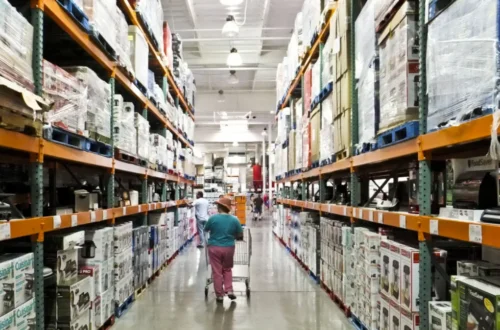
Costco functions on a membership-only, warehouse-club model. To shop at Costco, customers pay an annual fee (ranging from $65 for Gold Star members to $130 for Executive members). In exchange, they unlock access to bulk-buying power and a 100% satisfaction guarantee. Under Costco’s official policy, almost all products—with notable exceptions like major electronics, appliances, and diamonds, which carry strict 90-day return windows—come with no time limit whatsoever.
Trader Joe’s, conversely, operates as a neighborhood specialty grocery store accessible to the general public without any membership dues. Its return philosophy is famously encapsulated in its corporate FAQ tagline: "We tried it. We like it. If you don’t, bring it back for a refund or exchange." Like Costco, Trader Joe’s places no formal time limits on returns, accepting everything from a seasonal pumpkin-flavored item you bought months ago to a half-eaten bag of chips that didn’t meet your culinary expectations.
Despite these consumer-friendly similarities, the divergence lies in execution, tracking, and the enforcement of boundaries. Costco’s membership model means that every single transaction—and conversely, every single return—is inextricably linked to an individual’s membership card. Trader Joe’s, operating without a membership tier or loyalty program, has no built-in digital ledger tying a cart of groceries to a specific identity. These structural differences dictate how each company manages the inevitable abuse of their respective systems.
Chronology: The Evolution of "No Questions Asked" Retailing
To understand where these policies stand today, it is helpful to trace how they developed and where the friction points have historically emerged.
The Era of Unquestioned Goodwill
For decades, both Costco and Trader Joe’s operated on an unspoken social contract. Retail culture in the late 20th century heavily prioritized frontline employee empowerment. Managers were given immense discretion to make customers happy on the spot, creating legendary status for both chains. It was during this era that the mythological "holiday return stories" were born—tales of customers returning dead Christmas trees in January, or outdoor grills that had weathered three seasons of snow.
The Digital Age and Viral Exploitation
As social media platforms like Reddit, TikTok, and X (formerly Twitter) exploded in popularity throughout the 2010s and 2020s, these permissive policies transformed from quiet perks into viral challenges. Internet users began posting increasingly absurd first-hand accounts of returns that tested the boundaries of human reason.
For Costco, employees and shoppers alike shared staggering anecdotes. One Redditor recounted witnessing a customer return milk simply because they "didn’t have time to drink it all before the expiration date." Another shared a story of a shopper who dropped a case of beer at home, cleaned up the broken glass using a newly purchased Costco vacuum, and then returned both the shattered beer and the vacuum filled with glass shards.
Trader Joe’s employees chimed in with equally baffling tales. One staff member shared a story of a customer returning a single spice jar with a best-by date that predated the employee’s own birth—meaning the spice was likely more than 30 years old.
The Turning Point: Costco Cracks Down
The turning point for this era of absolute leniency arrived quietly in the mid-2020s. By early 2026, retail analysts and frequent shoppers began noticing a palpable shift in tone at Costco’s return counters. The informal "no questions asked" policy began hardening into a more scrutinized, data-driven evaluation process. Customers took to online forums to voice their frustration, noting that front-line workers were beginning to "really dig in" on certain items, ending an era of frictionless, casual returns that long-standing members had enjoyed for decades.
Supporting Data: What the Numbers and Customer Accounts Tell Us
The mechanics of how returns are processed at each retailer reveal a stark contrast in data utilization and consumer accountability.
Costco’s Digital Panopticon
Because Costco requires a membership card for entry and checkout, the company maintains a comprehensive, life-of-membership database. Every transaction is logged. When an item is brought to the return desk, the employee scans the membership card, instantly pulling up the purchase history.
This digital trail is a double-edged sword. On one hand, it means customers never need to worry about holding onto paper receipts; staff can locate the transaction in seconds. On the other hand, it allows Costco’s automated systems and store managers to monitor return frequencies with hawk-like precision. If a member’s return-to-purchase ratio crosses an invisible threshold, or if they exhibit a pattern of returning high-value items repeatedly, flags are raised.
Trader Joe’s Decentralized Approach
Trader Joe’s handles data collection very differently. Because it does not track individual consumer purchases at checkout, it lacks a centralized customer ledger. When items are returned without a receipt, policies can vary unpredictably from store to store. While some locations will cheerfully hand over cash or card refunds, others may offer only store credit, or—in extreme cases involving chronic, bad-faith returners—deny the refund altogether if no proof of purchase can be produced.
Interestingly, Trader Joe’s does track return data, but with a different corporate objective. Instead of monitoring individual shoppers to weed them out, Trader Joe’s utilizes return data at the product level. If a specific private-label item experiences a sudden spike in returns across multiple stores, corporate quality assurance teams investigate whether the recipe, manufacturer, or packaging needs to be altered or pulled from shelves entirely.
Official Responses and Corporate Stance
Neither Costco nor Trader Joe’s has entirely dismantled their generous return frameworks, as doing so would alienate the core brand identity that drives their market success. However, their official guidelines and public postures reflect a growing need to balance customer satisfaction with loss prevention.
Costco’s Balance of Satisfaction and Accountability
Costco’s official membership agreement explicitly states that it reserves the right to terminate memberships at its absolute discretion. While the company heavily promotes its 100% satisfaction guarantee, corporate leadership has increasingly empowered store managers to enforce penalties against members who abuse the system.
When a Costco membership is revoked due to excessive returns, the ban is often permanent, and the remaining balance of the annual membership fee is refunded. This serves as a clear, unyielding message: while Costco wants you to be satisfied, the warehouse club is not a free rental service or a municipal disposal site for unwanted goods.
Trader Joe’s Relentless Optimism
Trader Joe’s corporate communications remain remarkably unwavering. The company leans heavily into its folksy, community-oriented persona. By maintaining a policy rooted in trust rather than surveillance, Trader Joe’s projects an image of corporate benevolence.
Management frequently instructs crew members to prioritize making the customer feel valued over interrogating the validity of a return. Because a large percentage of Trader Joe’s inventory consists of proprietary, private-label goods (often accounting for over 80% of store stock), the company absorbs the cost of returns as a necessary marketing and product-development expense. If a customer dislikes a private-label item, refunding it is seen as a low-cost way to encourage them to try something else on their next visit.
Implications: The Future of Retail Flexibility
The contrasting trajectories of Costco and Trader Joe’s return policies hold significant implications for the broader retail industry, highlighting the delicate tension between consumer trust and corporate sustainability.
1. The Death of the "No Questions Asked" Era
Costco’s recent pivot toward stricter return enforcement signals a broader industry realization: unlimited leniency is financially unsustainable in an era of rising operational costs, inflation, and widespread social media amplification. As automated tracking becomes more sophisticated, major retailers are increasingly willing to sacrifice the goodwill of a small fraction of chronic abusers to protect their overall profit margins.
2. The Power of Private Labels in Customer Retention
Trader Joe’s ability to maintain an ultra-generous return policy without a membership paywall is heavily subsidized by its unique business model. Because they control their supply chain through private-label products, their profit margins on those items often allow them to absorb the occasional fraudulent or absurd return without major financial strain. Other traditional grocery chains attempting to copy this model without a robust private-label ecosystem would likely face severe financial drainage.
3. The Changing Social Contract of Shopping
Ultimately, the evolution of these return policies reflects a fraying of the social contract between consumers and corporations. When a small subset of shoppers treats retail return counters as a testing ground for recklessness—returning expired spices from decades ago, half-empty cartons of milk, or broken beer-laden vacuums—they ruin the system for everyone else.
Costco’s crackdown serves as a warning shot to consumers: hyper-generous corporate policies are a privilege, not an inherent right. As surveillance and data analytics continue to integrate into the shopping experience, the era of frictionless, no-consequences consumerism is drawing to a close. Whether Trader Joe’s can maintain its idyllic, trust-based oasis in the face of these pressures remains one of the most fascinating ongoing experiments in modern retail.