
September 9, 2026
Sponsored by Attica Wines
Just a half-hour drive from the legendary pillars of the Acropolis lies a sprawling, sun-drenched wine region that challenges almost every convention of modern viticulture. While wine regions across the globe are typically mapped out like a hierarchical ladder—with broad regional designations at the bottom and tightly regulated, hyper-specific appellations at the top—Attica refuses to play by those rules.
Encompassing over 6,200 hectares of vineyards tended by roughly 7,000 independent growers, PGI Attiki operates as a singular, unified appellation. Yet, within its boundaries lies a fascinating paradox: it is home to a single dominant Mediterranean climate that fractures into four distinct microclimates, shaping Greece’s most widely planted grape variety—Savatiano—into a diverse spectrum of expressions.
For wine enthusiasts and trade professionals alike, Attica is no longer just a historical footnote or a gateway to the Greek islands; it is a dynamic, terroir-driven frontier ready to be discovered.
Main Facts: The Anatomy of PGI Attiki
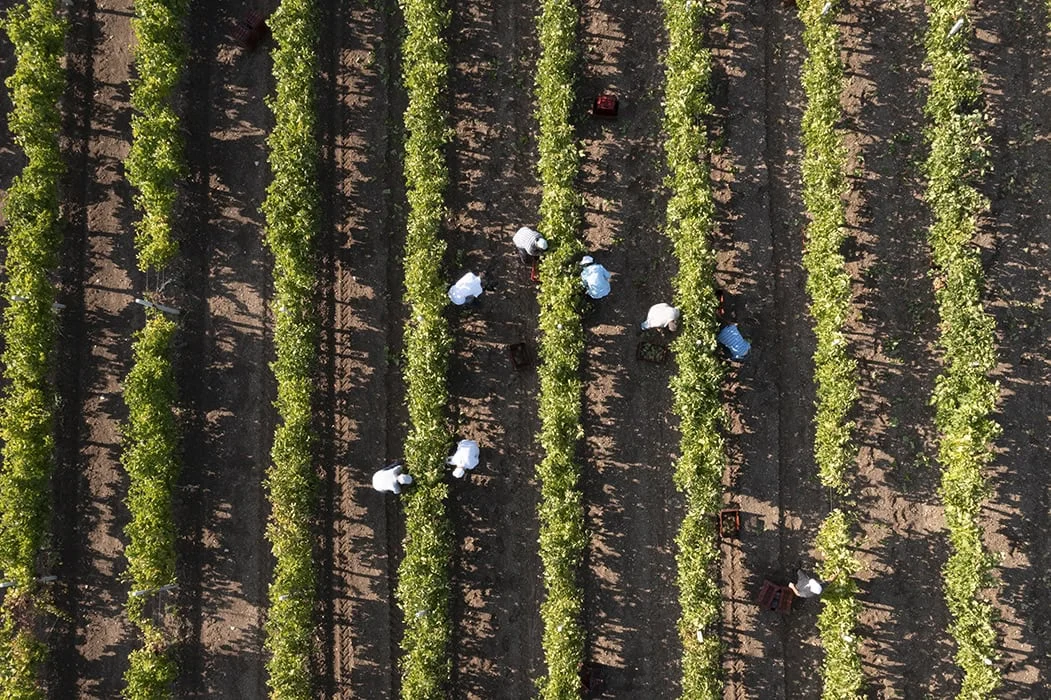
At its core, PGI Attiki covers the entirety of the Attica administrative region, sourcing its fruit from vineyards situated at elevations starting 30 meters above sea level and climbing upward. The terrain is a tapestry of mountainous, semi-mountainous, and lowland sites underpinned by diverse soils, predominantly featuring limestone and calcareous-clay. Naturally poor and inherently yield-limiting, these soils provide an ideal canvas for stress-resistant grapevines.

While the appellation officially permits the production of white, red, and rosé wines—ranging from bone-dry table styles to rich, sweet dessert wines crafted from sun-dried grapes—its undisputed champion is the fresh, crisp, dry white wine crafted from Savatiano.
The Fragmentation Paradox and Vineyard Survival
The sheer structure of Attica’s wine industry is shaped by generations of land inheritance. The region’s 6,200 hectares are divided among 7,000 growers, meaning the average holding sits at just under one hectare per farmer. This deep fragmentation has had two profound historical consequences:
- The Regional Name as a Necessity: Because a single winery may farm tiny parcels scattered across various kilometers with entirely different soil compositions, the regional PGI Attiki designation is often the only label that accurately and honestly describes the resulting wine. Here, the regional name is not a fallback for inferior fruit; it is a definitive statement of fact.
- The Preservation of Ancient Vines: This parcel-by-parcel division protected the region’s oldest vines. No single landowner ever held enough continuous acreage to justify bulldozing and replanting an entire block with commercial international varieties. Consequently, ancient, gnarly, dry-farmed bush vines were left untouched, tended painstakingly by hand across generations.
Chronology: From Ancient Roots to Modern Revival
To understand Attica’s current standing, one must look at how its viticultural history has quietly evolved over the decades.
- Ancient Beginnings: Viticulture in Attica dates back thousands of years, inextricably linked to the birth of Western civilization, trade, and the cult of Dionysus. The proximity to Athens ensured that Attica’s wines were constantly flowing through the ancient city’s symposiums.
- The Mid-20th Century (The Era of Gobelet Vines): During the 1950s, extensive plantings of gobelet-trained bush vines took root on the poor limestone soils of the region. Without irrigation, these vines were forced to dig deep root systems to survive the arid Greek summers.
- 1935 (Proof of Aging Potential): Proving that Savatiano is far from a simple, short-lived quaffing wine, a notable historical bottling of Attica Savatiano was released in 1935 after spending a remarkable eight years resting in bottle—part of a massive production run of 200,000 bottles that highlighted the variety’s structural backbone.
- The Late 20th Century: For decades, Attica was unfairly stereotyped as the home of industrial-scale Retsina (pine-resinated wine), overshadowing the true potential of unresinated Savatiano grown on its historic limestone terroir.
- Present Day (2026): A modern renaissance is underway. Growers, capitalizing on 70-year-old dry-farmed bush vines and precision microclimate mapping, are redefining PGI Attiki as one of Europe’s most exciting terroir-driven white wine regions.
Supporting Data: Four Expressions of One Mediterranean Climate
With the notable exception of its west-north-western corner, the entire Attica region is cradled by the sea. Cool maritime breezes blow inland, acting as a natural air conditioner against intense summer heatwaves. However, the rugged topography creates barriers, dividing the zone into distinct climatic pockets dictated by coastal proximity, topographical aspect, and altitude.
1. The Eastern Zone (The Warm and Dry Hearth)
- Characteristics: The warmest and driest part of the appellation.
- Data: Receives approximately 2,900 hours of sunshine annually alongside less than 400 to 450 millimeters of rain.
- Flavor Profile: Wines originating from sub-zones like Keratea lean heavily into mineral and herbal complexities, driven by heat and sun-baked soils.
2. The Western Zone (The Gulf-Cradled Slopes)
- Characteristics: Nestled between the Saronic and Corinthian gulfs, this area benefits from a relatively cooler maritime influence.
- Data: Vineyards climb the slopes of Mount Geraneia to elevations reaching up to 700 meters.
- Flavor Profile: Retains striking natural acidity and balanced alcohol levels despite the southern latitude.
3. The North-Western Zone (Continental Whispers)
- Characteristics: The slopes of Mount Kithaironas introduce distinct continental weather patterns.
- Flavor Profile: Characterized by greater diurnal temperature shifts, yielding structured wines with savory depth.
4. Northern Attica (The Alpine Cool)
- Characteristics: Spanning the foothills of Mount Parnitha and Mount Penteli, this is the coolest sector of the appellation.
- Data: Altitudes reach 400 meters in areas like Stamata and Kapandriti.
- Flavor Profile: Stamata yields wines that are exceptionally lean, elegant, and vibrant, marked by piercing high acidity and moderate alcohol.
One Grape, Two Worlds: Irrigated vs. Dry-Farmed Bush Vines
Savatiano accounts for roughly 5,500 of the region’s 6,200 hectares. How it is farmed drastically alters the glass:

- Conventional Flatland Vineyards: Planted on flat, fertile, irrigated ground, the vines produce higher yields intended for fresh, early-release, approachable table wines.
- Ancient Gobelet Bush Vines: Planted in the late 1950s on poor, non-irrigated limestone soils, yields plummet to a meager 28 to 35 hectoliters per hectare. The resulting wine transforms entirely: it is deeply concentrated, mineral-driven, and possesses an aging capacity that easily extends a decade or more.
Official Responses and Industry Perspectives
Viticulturists, winemakers, and trade organizations championing the Wines of Attica initiative have increasingly shifted their messaging toward terroir education.
"There is a persistent misconception that a regional wine is somehow a compromise," notes regional viticultural outreach reports. "In Attica, because of our fragmented family-held land plots, PGI Attiki is the most honest badge a bottle can wear. It tells the story of farmers who refused to bulldoze their heritage, maintaining living museums of 70-year-old bush vines."
Leading producers emphasize that international recognition depends on highlighting Savatiano’s chameleon-like ability to reflect its microclimate. Whether it is the saline-kissed, herbal tones of the eastern coast or the razor-sharp, high-acid elegance of the northern mountain slopes, industry leaders are united in proving that Greece’s most planted grape is also one of its most noble.
Implications: The Future of Attica on the Global Stage
The ongoing renaissance of PGI Attiki carries profound implications for both the Greek wine industry and the global export market:
- Challenging Perceptions of Greek White Wine: While Assyrtiko from Santorini captured global attention for Greece, Savatiano offers a different narrative—one defined by textural weight, subtle complexity, and incredible longevity at a fraction of the price point.
- The Rise of Minor Varieties: While Savatiano reigns supreme, the appellation is also seeing exciting developments with indigenous varieties like Malagousia, Assyrtiko, and Roditis. Furthermore, while traditionally known for whites, the appellation’s greenlight for red varieties—including Agiorgitiko, Limniona, Mandilaria, Mouchtaro, alongside international staples like Syrah and Cabernet Sauvignon—allows progressive makers to craft medium- to full-bodied reds and vibrant dry rosés.
- Enotourism and Proximity: Situated merely 30 minutes from the heart of Athens, Attica occupies a unique geographical advantage. International travelers visiting the Acropolis can transition from ancient ruins to ancient vines in under an hour, turning the region into an accessible, must-visit urban-adjacent wine tourism destination.
Ultimately, PGI Attiki stands as a testament to resilience. Bound by a single Mediterranean climate yet fractured into four distinct microclimates, safeguarded by ancient inheritance laws, and anchored by a misunderstood grape finally receiving its due, Attica proves that the future of wine often lies in honoring the roots of the past.