Introduction: The Gap Between Hope and Reality
In the lexicon of modern medicine, few words carry the emotional and rhetorical weight of "breakthrough" and "game changer." When applied to oncology, these terms frequently herald the arrival of a new chemotherapy drug, promising renewed hope to patients facing life-threatening diagnoses. Yet, beneath the polished press releases and optimistic headlines lies a starkly different statistical reality.
When researchers aggregate the overall survival benefits of newly approved chemotherapy drugs across a dozen years, the average extension of life is a mere 2.1 months. Furthermore, a substantial portion of these therapies fails to deliver clinically meaningful benefits at all.
This deep dive examines the widening chasm between pharmaceutical marketing and clinical outcomes, the paradox of post-market drug approvals, the sobering statistics behind survival metrics, and the urgent need for radical transparency in patient-oncologist communications.
Main Facts: What the Data Reveals About Modern Chemo
The foundational premise of modern cancer treatment relies on the efficacy of cytotoxic drugs—agents designed to target and destroy rapidly dividing cancer cells. Unfortunately, these drugs are rarely discerning; they act as blunt instruments, causing collateral damage to healthy cells in the process. This collateral damage accounts for the severe, sometimes irreversible toxicities associated with chemotherapy, ranging from peripheral neuropathy and heart failure to severe immune suppression and the degradation of the gastrointestinal lining.
Despite these heavy biological tolls, the actual survival gains for many of the most common solid tumors remain modest. When analyzing comprehensive drug approvals over extended observation periods, the average overall survival gain sits at just over two months.
Compounding the issue is the financial toxicity of these treatments. The most expensive therapies can command annual price tags nearing $170,000. In several documented cases, the highest-priced regimens failed to improve overall survival entirely and were instead associated with a measurable decline in the patient’s quality of life. Despite post-market data frequently demonstrating a lack of meaningful clinical benefit compared to placebos, the vast majority of these drugs retain regulatory approval and remain commercially available at exorbitant rates.
Chronology of a Disconnect: From Clinical Trials to Patient Expectations
Understanding how patients arrive at distorted expectations regarding chemotherapy requires tracing the trajectory of clinical trial design and medical communication over the past several decades.
Phase III Trials and Trivial Gains
In the early stages of oncological evaluation, pharmaceutical companies design large Phase III clinical trials aimed at identifying statistically significant differences in survival endpoints. While these trials achieve statistical significance, the clinical relevance of the findings is frequently negligible.

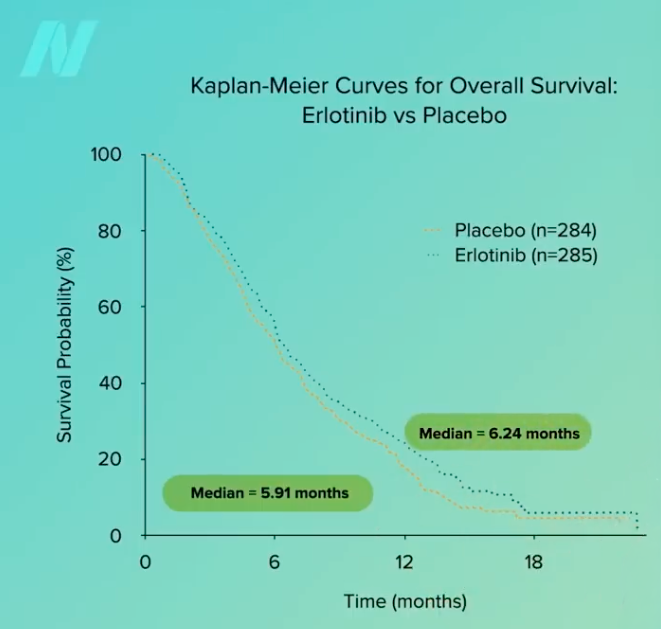
A classic example involves advanced pancreatic cancer trials evaluating the addition of the drug erlotinib to gemcitabine. While the combination trial yielded a statistically significant prolongation of overall survival compared to gemcitabine alone, the actual numerical difference was slight: the control group survived an average of 5.91 months, while the multi-drug cohort survived 6.24 months. This translates to an extension of roughly 10 days—a timeframe achieved alongside heightened side effects and substantial financial expense.
The Breakdown in Informed Consent
As these trials transition into standard practice, a critical communication failure often occurs in the clinic. Studies indicate that approximately three-quarters of patients with metastatic lung or colorectal cancer do not understand that their chemotherapy regimens are not curative.
Instead of recognizing that chemotherapy is primarily a palliative intervention meant to eke out a few extra weeks or months, many patients harbor the mistaken belief that the treatment offers a tangible chance of remission or cure. This misconception deprives patients of their autonomy, preventing them from accurately weighing the severe risks of cytotoxic toxicity against the modest, non-curative benefits.
Supporting Data: Survival Metrics Across Tumor Types
To evaluate the true value proposition of modern chemotherapy, oncologists look at hard statistical data across specific cancer classifications. The efficacy of chemotherapy is by no means uniform; rather, it exists on a dramatic spectrum depending on the malignancy.
High-Efficacy Exceptions
For certain rare or specialized malignancies, chemotherapy has transformed outcomes over the past half-century.
- Testicular Cancer: Decades of pharmacological advancement have yielded chemotherapy protocols that offer patients with advanced testicular cancer greater than a one-in-three chance of surviving to the five-year mark and beyond.
- Hodgkin’s Lymphoma: Similarly, targeted multi-agent regimens have turned a once-fatal diagnosis into a highly manageable and frequently curable condition.
Low-Efficacy Realities in Common Cancers
Conversely, for the most prevalent adult malignancies—including colon, lung, breast, and prostate cancers—the landscape is starkly different. Even when data is analyzed through models that deliberately err on the side of overestimating therapeutic benefit, the statistical probability that standard chemotherapy will enable survival to the five-year milestone for these solid tumors often hovers around 1% to 2%.
Patient Preferences vs. Clinical Reality
When researchers survey cancer patients regarding what constitutes an acceptable trade-off for toxic side effects, the majority state they would require at least six months of extended life to justify the ordeal. However, individual perspectives vary wildly. While one patient might view an extra week of life as an invaluable gift, another might decline chemotherapy entirely if it compromised the quality of their remaining days. The common thread in all ethical healthcare frameworks is that individuals cannot make these deeply personal calculations without unvarnished, transparent data.
Official Responses and Industry Semantics: Decoding Clinical Literature
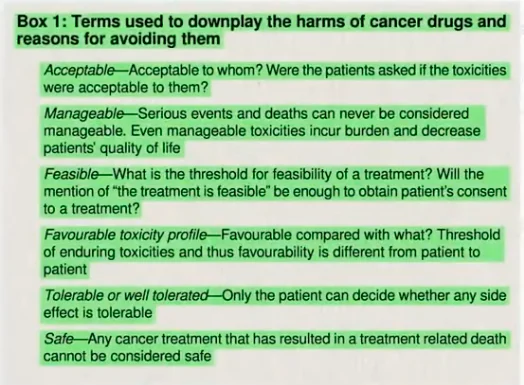
A major driver of patient misunderstanding is the language used in medical literature and pharmaceutical reporting. Top-tier medical journals frequently publish trial results utilizing euphemistic terminology to describe drug safety and toxicity profiles.
The Lexicon of Euphemisms
Industry-sponsored trials routinely describe adverse events using reassuring descriptors:
- "Acceptable" or "Manageable": Terms used to characterize severe, life-threatening, or fatal toxicities. As critics point out, serious events and fatalities should never be categorized as "manageable."
- "Favorable" and "Feasible": Words deployed to describe side-effect profiles that double or triple the incidence of severe complications compared to control groups.
- "Tolerable" and "Safe": Labels assigned to cytotoxic compounds that can cause permanent organ damage, heart failure, and death.
Notably, when surveys assess the personal willingness of oncologists and oncology nurses to undergo intensive chemotherapy regimens themselves, they consistently express lower acceptance rates than the general public, intimately aware of the trade-offs involved.
Implications: The Path Toward Radical Transparency
The systemic reliance on marginal survival gains, coupled with aggressive pricing and opaque risk-reporting, has generated a crisis of medical ethics. The implications of maintaining the status quo affect healthcare systems, clinical relationships, and, most importantly, patient autonomy.
Restoring Patient Autonomy
For patients to make informed decisions about their bodies and their remaining time, oncologists must abandon medical jargon and misleading statistical framing. Phrases like "significant improvement in survival" must be translated into plain language—such as "an average extension of a week and a half"—so that patients grasp the exact scale of the benefit.
Shifting Focus to Prevention and True Innovation
Ultimately, the diminishing returns of late-stage cytotoxic chemotherapy underscore the urgent necessity of prioritizing cancer prevention. Public health initiatives focused on dietary modifications, lifestyle interventions, and early screening offer vastly superior potential for reducing overall cancer mortality compared to the pursuit of multi-thousand-dollar drugs that offer incremental extensions of life.
Until the medical and pharmaceutical establishments embrace radical transparency in reporting both efficacy and toxicity, patients will continue to navigate the most vulnerable moments of their lives under the weight of an unearned, manufactured hope.