In the rapidly evolving landscape of international travel and remote work, staying connected across borders has traditionally been a logistical headache. For years, digital nomads, frequent flyers, and long-term travelers have navigated a fragmented market of physical SIM card swaps, exorbitant home-carrier roaming fees, and temporary, single-destination electronic SIMs (eSIMs).
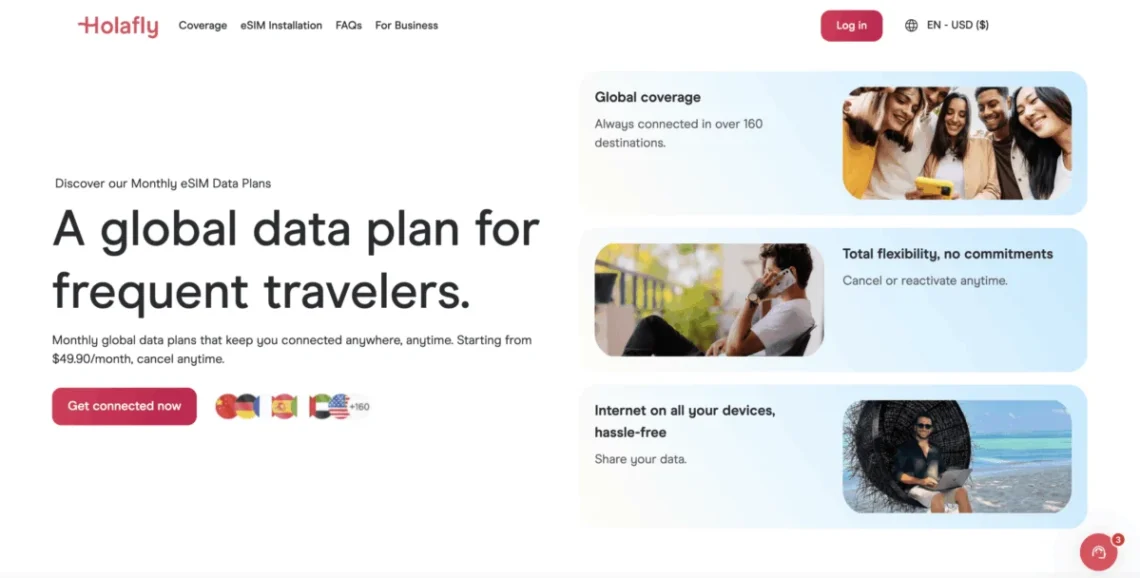
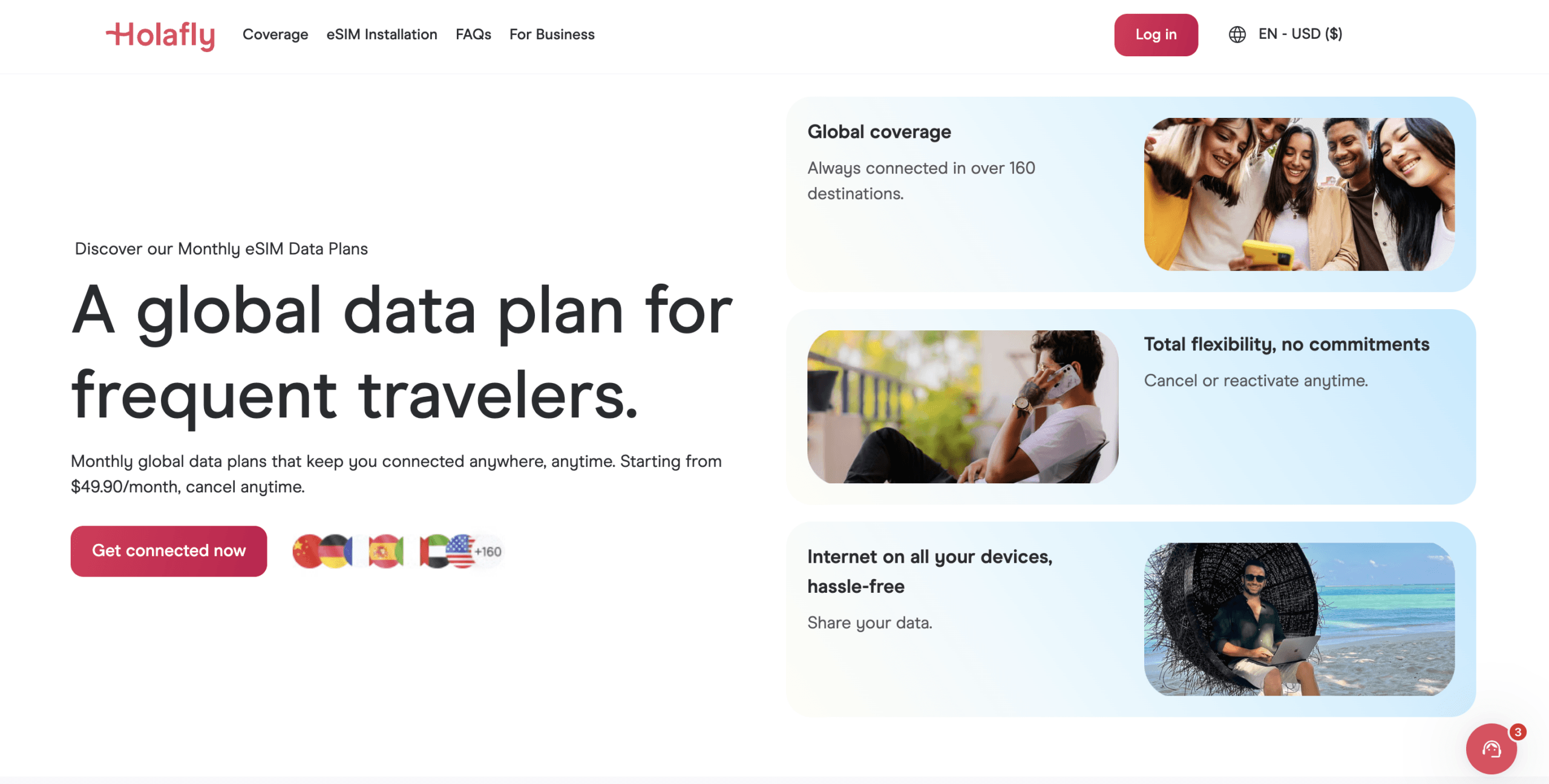
However, a significant shift in mobile telecommunications infrastructure is underway. Travel technology provider Holafly has introduced its latest innovation, Holafly Plans—an ongoing global subscription service designed to eliminate the friction of cross-border data management. By offering a single, persistent eSIM that operates across more than 160 destinations, this product bridges the gap between traditional domestic mobile carriers and temporary travel tech, signaling a new era for borderless connectivity.
Main Facts: What Are Holafly Plans?
At its core, Holafly Plans represents a structural evolution from traditional prepaid travel eSIMs. While standard eSIMs are engineered for single-destination, short-term trips (such as a two-week vacation to Portugal or Japan), Holafly Plans functions as a continuous, multi-destination subscription.
Key structural features of the service include:
- Global Coverage: A single eSIM profile provides network access across more than 160 countries.
- Subscription Models: Available on monthly, quarterly, and annual billing cycles with no long-term carrier contracts, allowing users to cancel at any time.
- Dual Tiers:
- The Unlimited Plan: Offers unthrottled high-speed data, unlimited mobile hotspot capability for tethering laptops and secondary devices, and a localized phone number (US, UK, or Canada) capable of receiving SMS verification messages.
- The Light Plan: Provides 25GB of high-speed monthly data alongside hotspot functionality, tailored for lighter users relying primarily on navigation, messaging, and web browsing.
- "Always On" Data Feature: Subscribers retain 1GB of complimentary backup data every month across 150+ destinations, which persists even if the main subscription is eventually canceled.
Pricing scales dynamically based on the commitment duration. For instance, committing to an annual billing cycle for the Unlimited Plan reduces the effective monthly cost to approximately $55 USD—a stark contrast to traditional major carrier international roaming passes, which routinely scale into the hundreds of dollars monthly.
Chronology and Industry Background: From Plastic SIMs to Borderless eSIMs
To understand the market significance of Holafly Plans, it is necessary to examine the rapid technological progression of mobile identity modules over the past decade.

Phase 1: The Era of the Physical SIM
For decades, international travel required locating a physical storefront upon arrival in a foreign country, purchasing a local prepaid SIM card, and physically swapping out the home carrier’s chip. This process frequently resulted in lost home-country SIM cards, disrupted communication channels, and immediate disconnection upon crossing international land borders.
Phase 2: The Rise of Destination eSIMs
The introduction of embedded SIM (eSIM) technology in smartphones eliminated the need for physical hardware swaps. Travelers could scan a QR code or install a profile via an app before departure, granting instant local network access upon landing. Companies like Holafly capitalized on this shift, offering regional and country-specific data packages. While revolutionary for vacations, this model still required travelers moving rapidly between multiple countries to purchase, install, and manage separate eSIM profiles continuously.
Phase 3: The Subscription-Based Global Model
Recognizing the friction inherent in managing multiple sequential eSIMs—particularly for the burgeoning digital nomad demographic—Holafly developed the unified subscription model. By negotiating multi-carrier agreements across 160+ nations, the company engineered a persistent software layer that automatically routes a user’s connection to local partner networks seamlessly, mimicking the behavior of a domestic carrier without the associated geographic restrictions or punitive pricing.
Supporting Data: Comparative Cost and Performance Analysis
For remote professionals and frequent travelers, mobile data is not a luxury; it is an essential business tool. Yet, legacy telecommunications structures have historically penalized international movement.
A comparative evaluation of major global data solutions highlights distinct differences in cost, data caps, and user friction:
| Feature / Cost | Holafly Plans (Unlimited Tier) | Major US Carrier Roaming Passes | Traditional Local SIMs / Single eSIMs |
|---|---|---|---|
| Monthly Cost | ~$55 – $65 USD (depending on billing cycle) | $100 – $300+ USD ($10/day international add-ons) | $60 – $120 USD (aggregated across multiple destinations) |
| Data Allowance | Truly Unlimited (High-Speed) | Capped at high speeds, then aggressively throttled | Varies by package (typically 5GB – 10GB blocks) |
| Operational Friction | Zero. Installed once; auto-connects in 160+ destinations. | Low initial setup, but financially unsustainable. | High. Requires purchasing new QR codes and swapping profiles at every border. |
| Hotspot Capability | Fully included for tethering multiple devices | Frequently restricted, throttled, or charged additionally | Varies wildly by local carrier restrictions |
The economic efficiency of a persistent global plan becomes starkly apparent when evaluating high-data use cases, such as video conferencing, media uploading, and remote systems management. Traditional carrier roaming add-ons, priced at roughly $10 per day, accumulate to $300 a month for capped, often throttled service. In contrast, global subscription alternatives reduce overhead while expanding operational capabilities.
Official Responses and Consumer Integration
User adoption and industry feedback have highlighted specific advantages and limitations inherent to continuous global eSIM subscriptions.
Target Demographics and Use Cases
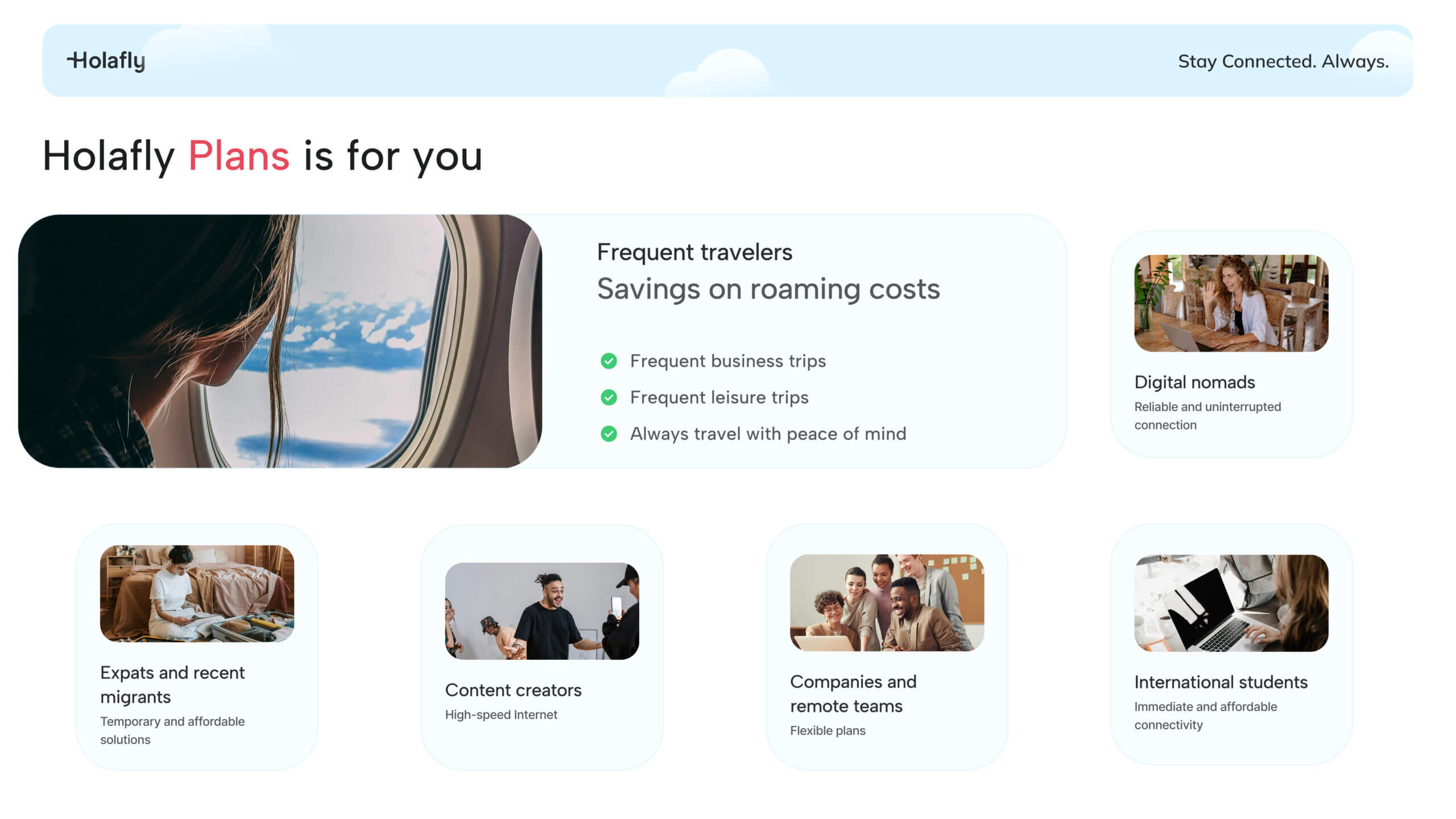
Industry analysts note that Holafly Plans is strategically targeted at two distinct user groups:
- The Multi-Destination Business Traveler: Professionals who take frequent, short international trips throughout the year and require uninterrupted connectivity without managing recurring administrative tasks.
- The Digital Nomad: Individuals living a nomadic lifestyle who cross international borders monthly or weekly and require robust hotspot capabilities to run remote businesses from laptops and tablets.
Conversely, standard destination-specific eSIMs remain the recommended option for casual tourists taking a single, isolated vacation lasting less than two weeks, as the upfront cost of a short-term tourist eSIM remains lower than initiating an ongoing subscription.
Consumer Protections and Support Infrastructure
To mitigate consumer hesitation regarding software-based telecommunications products, Holafly has integrated structural safeguards:
- 24/7 Human Customer Support: Real-time troubleshooting assistance available directly through digital channels.
- Refund Policies: Backing subscriptions with extended refund windows (such as a 6-month evaluation policy) to ensure hardware and regional compatibility.
- Zero-Contract Flexibility: The ability to pause, scale, or cancel services without termination fees.
Implications: The Future of Global Mobility and Telecommunications
The introduction of unified, subscription-based global eSIMs carries broad implications for both consumer behavior and the global telecommunications market.
1. Disruption of Legacy Roaming Monopolies
For decades, traditional domestic mobile carriers relied heavily on international roaming fees as a high-margin revenue stream. The proliferation of affordable, high-speed global eSIM subscriptions threatens this model. As consumers realize they can bypass home-carrier markups entirely through independent software providers, legacy carriers will face increasing pressure to restructure their international packages or cede market share entirely to agile, tech-first competitors.
2. Normalization of Borderless Remote Work
As infrastructure catches up to the cultural shift toward remote work, the barriers to international mobility continue to drop. Reliable, unlimited data combined with local calling numbers and robust hotspot tethering removes one of the final logistical hurdles for location-independent professionals. Workers can maintain productivity from remote mountain ranges, coastal islands, or metropolitan centers without worrying about network dropouts or exorbitant bills.
3. The Shift Toward Hardware-Agnostic Services
As eSIM architecture becomes standard across modern smartphones, tablets, and laptops, consumer loyalty is shifting away from physical network operators toward software service providers. The ability to maintain a single digital identity across global hardware ecosystems points toward a future where telecommunications services are completely untethered from physical storefronts and national boundaries.
Conclusion
Holafly Plans illustrates the ongoing maturation of travel technology. By addressing the specific pain points of high-frequency travelers—cost predictability, network continuity, and administrative fatigue—the service establishes a new benchmark for global connectivity. For the modern digital nomad, the era of juggling a dozen regional SIM cards is rapidly drawing to a close, replaced by a seamless, borderless digital experience.