In the annals of medical history, few dietary interventions have sparked as much initial skepticism—followed by profound clinical validation—as the "oatmeal cure." Long before the widespread availability of synthetic insulin, physicians were battling the devastating effects of diabetes with a humble, grain-based prescription. Today, as we grapple with a global epidemic of type 2 diabetes, modern science is circling back to these roots, discovering that the humble oat may be one of our most potent tools for glycemic control.
The Historical Genesis: From Skepticism to Clinical Triumph
At the turn of the 20th century, a diagnosis of diabetes was often a death sentence. With no exogenous insulin to manage blood glucose levels, the medical community was largely limited to restrictive, often starvation-like diets. It was in this climate that German physician Carl von Noorden introduced his revolutionary "oatmeal diet" in 1903.
Von Noorden’s proposal—prescribing a diet centered primarily around oatmeal—was met with intense professional derision. The medical establishment of the era struggled to reconcile how a grain-rich, carbohydrate-heavy diet could possibly benefit a disease characterized by the body’s inability to process carbohydrates. However, the evidence began to mount, and the results were impossible to ignore.
One of the most notable converts was the acclaimed physician James B. Herrick. Initially a staunch skeptic, Herrick began trialing the protocol on his own patients. His results were nothing short of transformative. By 1909, Herrick had shifted from doubt to advocacy, issuing a formal proclamation that no adolescent or juvenile diabetic patient should be denied the profound benefits of the oatmeal cure.
The legendary Dr. Elliott Joslin, the founder of the world’s oldest and largest diabetes clinic, echoed these sentiments. He famously described the effects of the diet as "sometimes magical," yet remained perplexed by the mechanism. To the clinicians of the early 1900s, it was "one of the greatest puzzles in diabetes." While they didn’t have the sophisticated tools of modern molecular biology, they identified a crucial clinical observation: the success of the oatmeal regimen relied on the strict exclusion of animal protein. They observed that when animal protein was introduced, the "favorable action" of the oatmeal was promptly annihilated.
The Modern Science: Why Oatmeal Works
More than a century later, we finally understand why the pioneers of the "oatmeal cure" were correct. The interaction between our diet and our physiology is dictated by more than just calories; it is dictated by the microbiome and insulin sensitivity.
Insulin Resistance and the Plant-Based Advantage
We now recognize that animal protein intake can intensify insulin resistance, the physiological bedrock of prediabetes and type 2 diabetes. Conversely, plant-based foods—specifically whole grains like oats—enhance insulin sensitivity. By removing animal fats and proteins, the oatmeal diet created a metabolic environment where the body could regain its efficiency in processing glucose.
The Power of Beta-Glucan
The primary hero in the oat is a fermentable fiber known as beta-glucan. Clinical data from over a dozen randomized controlled trials confirms that oats significantly improve both short-term and long-term blood sugar control. Furthermore, oats are a powerhouse for cardiovascular health, consistently lowering cholesterol levels.

The mechanism behind these benefits appears to be two-fold:
- Microbiome Manipulation: The fiber in oats acts as a prebiotic, serving as fuel for beneficial gut bacteria such as Lactobacillus and Bifidobacteria.
- Short-Chain Fatty Acid Production: Our gut flora ferments this fiber to produce short-chain fatty acids, which exert anti-inflammatory effects throughout the body. Research indicates that the gut bacteria selectively promoted by high-fiber diets can directly alleviate the systemic inflammation associated with type 2 diabetes.
Clinical Chronology: The Two-Day Intervention
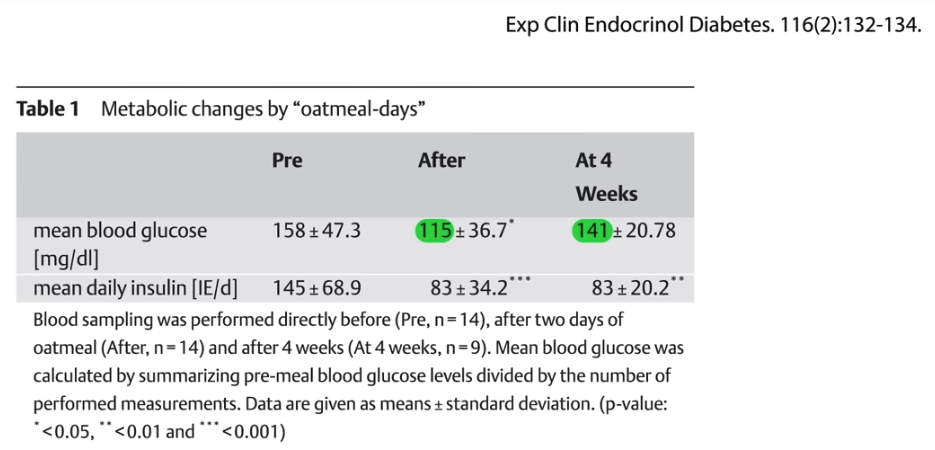
Modern research has put the "oatmeal cure" to the test, and the results have been staggering in their speed and efficacy. Recent studies have demonstrated that a brief, two-day intervention of an oatmeal-based diet can yield beneficial effects that persist for up to a month.
In a randomized, controlled, crossover trial, patients with uncontrolled type 2 diabetes were placed on a two-day oatmeal regimen. The results were dramatic: participants experienced a 40% reduction in their required insulin dosage compared to those on a standard hypocaloric (calorie-restricted) diabetic diet.
Perhaps most remarkably, this benefit did not vanish when the diet ended. Researchers observed that the normalization of average blood sugars continued for weeks after the patients returned to their regular diets. This suggests that the intervention may effectively "reset" the metabolic threshold, providing a period of improved glycemic stability that extends far beyond the two-day consumption window.
The Role of Fiber-Feeders in Long-Term Control
The success of these interventions is tied directly to the gut microbiome. When a patient consumes a diet rich in oats, beans, fruits, vegetables, and nuts, the population of "fiber-feeders"—bacteria that thrive on plant fiber—expands rapidly.
These fiber-feeders are the engines of metabolic health. Data shows that fasting blood sugar levels in diabetic patients can drop by approximately 25% within just one month of adopting such a diet. The correlation is clear: the greater the diversity and abundance of these short-chain fatty acid-producing bacteria, the more significant the improvement in hemoglobin A1c levels. By fostering a healthy internal ecosystem, patients are essentially building a biological defense system against the fluctuations of diabetes.
Implications for Clinical Practice and Safety
While the results are promising, it is imperative to approach these dietary changes with clinical oversight. Because the oatmeal intervention is so effective, it can lead to "dangerous overmedication" if standard blood sugar drugs are not adjusted.
Physicians must be prepared to "deprescribe" insulin and other medications as the patient’s insulin sensitivity improves. This is not a "do-it-yourself" fad diet; it is a clinical intervention. It is particularly contraindicated for individuals who struggle to monitor or report symptoms of hypoglycemia (low blood sugar), as the rapid drop in glucose levels requires vigilant management.
Choosing the Right Grain: Glycemic Index Matters
Not all oats are created equal. The health benefits are inextricably linked to the physical structure of the grain, which dictates the rate of digestion and the subsequent glycemic response.
- Oat Groats: These are the most intact form of the grain. They are the "wholiest" of oats and offer the best glycemic control.
- Steel-Cut Oats: Created by slicing groats into several pieces, these are considered a low-glycemic-index food, typically averaging under 55.
- Old-Fashioned Rolled Oats: These are steamed and flattened, resulting in a glycemic index of approximately 55.
- Instant Oats: These are heavily processed and rolled thinly, leading to a higher glycemic index (around 79). While still better than many processed breakfast cereals, they lack the slow-release benefits of their steel-cut counterparts.
Integrating Oatmeal into a Modern Lifestyle
The "oatmeal cure" of the early 20th century was often monotonous, but modern culinary ingenuity makes it an easy, sustainable, and even delicious component of a healthy lifestyle.
For those looking to adopt these benefits, experts recommend a "BROL" base (Barley, Rye, Oats, and Lentils) to maximize fiber diversity. From there, the potential for flavor is limitless. A "chocolate-covered-cherry" breakfast, made with frozen dark cherries, raw cocoa powder, dates, and walnuts or pumpkin seeds, provides a dessert-like experience that remains nutritionally dense.
Alternatively, savory preparations are gaining popularity. By incorporating sautéed greens, mushrooms, roasted vegetables, or curry spices, oatmeal transforms from a breakfast staple into a versatile, nutrient-packed meal that can be eaten at any time of day.
Conclusion
The story of the oatmeal diet is a testament to the fact that medical progress does not always move in a straight line. Sometimes, the most advanced solutions are the ones we discovered, discarded, and are only now beginning to fully understand.
By prioritizing whole, intact grains and fostering a diverse gut microbiome, patients with diabetes can utilize the same "magical" remedy that once baffled the giants of 20th-century medicine. Through careful medical supervision, dietary fiber-loading, and a transition away from animal-heavy diets, the "oatmeal cure" offers a path to better health that is backed by both history and the cutting edge of science.