NEW YORK — In the ever-evolving landscape of contemporary home cooking, few culinary voices carry the weight, warmth, and reliable ingenuity of Deb Perelman, the creative force behind the globally adored food blog and brand Smitten Kitchen. Known for meticulously testing recipes in her notoriously compact Manhattan kitchen, Perelman has once again captured the zeitgeist of seasonal eating. Her latest creation—a vibrant, minimalist, and texturally complex raw snow pea and avocado salad—is quietly taking over kitchens as home cooks search for fresh, low-effort relief from summer heat waves and end-of-year fatigue.
While snow peas are traditionally relegated to the steaming heat of a wok or the supporting cast of a complex stir-fry, Perelman’s latest iteration flips convention on its head. By treating the legume as a crisp, raw foundational green, she has unlocked a refreshing profile that bridges the gap between sophisticated restaurant dining and weeknight accessibility.
Main Facts: Deconstructing the Dish
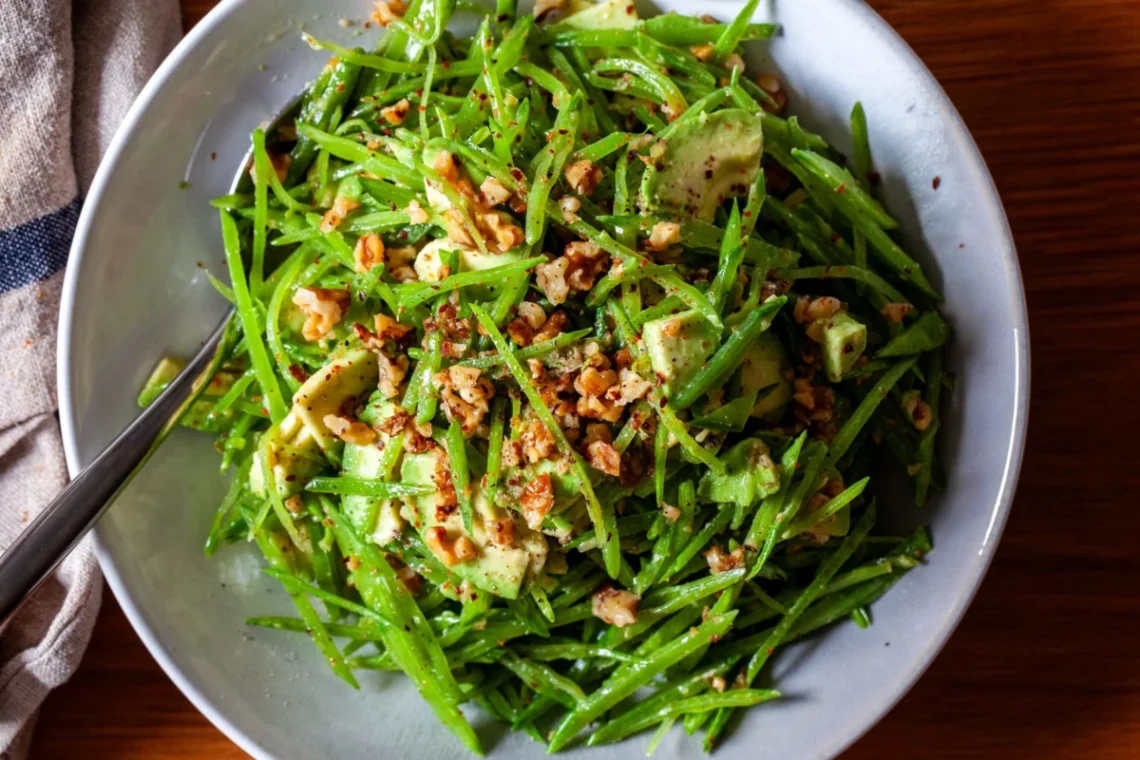
At its core, the newly popularized snow pea and avocado salad is a masterclass in the economy of ingredients. Moving away from the cooked, tender-crisp expectations of Asian-inspired takeout dishes, this preparation treats snow peas much like a slaw.
The dish relies on a careful trifecta of textures:

- The Crunch: Slaw-like ribbons of raw snow peas, given an initial crisping shock in an ice-water bath, paired with coarsely chopped, toasted walnuts.
- The Softness: Pillowy chunks of ripe avocado that yield gently against the crisp snap of the vegetables.
- The Binding Element: A bright, emulsified dressing crafted from fresh lemon juice, high-quality extra-virgin olive oil, kosher salt, freshly cracked black pepper, and a kick of red pepper flakes.
Diverging from a previous version featured in her bestselling cookbook, Smitten Kitchen Keepers—which incorporated pecorino cheese and walnuts—this updated summer iteration drops the dairy entirely. The result is a lighter, vegan-friendly plate that leans heavily on the natural sweetness of the raw pea pods balanced by the earthiness of toasted nuts and the sharp tang of citrus.
Chronology: From the NoMad to the Home Kitchen
The journey of this raw pea salad did not begin in a home test kitchen, but rather in the high-pressure environment of fine dining.
- The Inspiration: Perelman first encountered the concept of eating raw snow peas in a salad at the now-closed, critically acclaimed NoMad restaurant in New York City. The experience left a lasting impression, planting a seed in what she often describes as the "overflowing file cabinet" of ingredient preparation ideas stored in her brain.
- The Cookbook Iteration: Years later, Perelman adapted the concept for her third cookbook, Smitten Kitchen Keepers, pairing the raw pea base with walnuts and pecorino cheese to create a balanced, comforting side dish.
- The Seasonal Pivot: Facing the collective exhaustion of late-spring scheduling, coupled with intense personal cravings, Perelman revisited the recipe. Stripping away the pecorino and amplifying the citrus-and-chile profile, she debuted the streamlined version just as temperatures began to rise, positioning it as the ultimate low-effort dish for high-temperature weather.
Supporting Data: Culinary Science and Preparation Mechanics
To achieve the optimal texture required for a raw vegetable salad, specific culinary techniques are non-negotiable. Perelman’s published preparation guidelines highlight several key steps rooted in fundamental kitchen science:
1. The Ice-Water Shock
Soaking the snow peas in a large bowl of ice water for 10 to 20 minutes (or longer) serves a dual purpose. It rehydrates and maximizes the cellular turgor pressure of the pea pods, ensuring an audible, satisfying crunch upon the first bite.

2. The Ribbon Cut
To transform a flat, slightly rigid snow pea pod into a palatable salad green, geometry matters. After draining and patting the peas dry, they are gathered into small stacks and sliced lengthwise into thin, flexible ribbons. This mimics the mouthfeel of shredded cabbage or thinly sliced romaine.
3. The Toasting Imperative
According to Perelman’s culinary philosophy, all nuts—walnuts especially—undergo a chemical transformation when exposed to dry heat. Toasting the walnuts on a small sheet pan in a 350°F (175°C) oven for 6 to 10 minutes releases their latent essential oils, muting any bitter raw tannins and imparting a deep, aromatic warmth that anchors the bright acidity of the lemon dressing.
Official Guidelines: The Author’s Step-by-Step Method
For home cooks looking to replicate the dish, Perelman outlines a precise, rapid assembly process designed to minimize kitchen time:
- Prep the Walnuts: Toast walnut halves in a 350°F oven until fragrant and slightly darkened. Allow them to cool before chopping them into "rubble-sized" pieces.
- Crisp the Peas: Submerge fresh snow peas in ice water for at least 15 minutes. Drain thoroughly and pat dry. Stack and slice into thin ribbons.
- Mix the Dressing: In a large mixing bowl, combine the chopped walnuts, extra-virgin olive oil, fresh lemon juice, kosher salt (0.5 to 1 teaspoon to taste), black pepper, and a pinch of red pepper flakes (roughly 0.5 teaspoon). Whisk until unified.
- Toss and Serve: Add the snow pea ribbons to the bowl, tossing until thoroughly coated in the citrus-walnut mixture. Finally, fold in the diced avocado with a gentle hand to prevent bruising.
Note on Timing: Perelman advises that this dish is best consumed immediately. The acid in the lemon juice will begin to discolor and pickle the vibrant green snow peas if left to sit for extended periods.

Implications: The Trend Toward Minimalist, Low-Fatigued Cooking
The viral traction of Perelman’s snow pea and avocado salad points to a broader, cultural shift in how society approaches home cooking during periods of stress and seasonal transitions.
As urban populations face increasingly intense summer heat waves, traditional cooking methods—which involve turning on ovens, boiling heavy pots of water, or monitoring long braises—become less appealing. Dishes that require fewer than five main ingredients and demand less than fifteen minutes of active labor are rapidly moving from culinary blogs into the mainstream culinary lexicon.
Furthermore, the recipe reflects a growing consumer demand for vegetable-forward dishes that do not rely on heavy animal fats or complex artisanal cheeses to taste complete. By letting the natural crispness of the vegetable take center stage, recipes like this one demonstrate that simplicity, when executed with attention to texture and acid balance, can rival the complexity of high-end restaurant fare.
Whether served as a solitary light lunch for a busy professional running on end-of-year fumes, or as a vibrant, conversation-starting side dish at a backyard summer barbecue, the snow pea and avocado salad proves that the most memorable meals are often the ones that require the least amount of fuss.