Main Facts: Redefining the Backyard Classic Without Reinventing the Frank
In the realm of culinary content creation, few figures command the granular dedication of Deb Perelman, the creative force behind the globally renowned food blog Smitten Kitchen. Known for meticulously testing and publishing recipes that push home cooks to recreate notoriously industrial foods from scratch—ranging from artisan cream cheese and Fig Newtons to bagels and pure vanilla extract—Perelman recently stopped short of a traditional scratch-made meat project.
In her latest feature, Perelman clarified a humorous misconception: her debut hot dog recipe is decidedly not a recipe for making hot dogs. Deferring the complex industrial art of grinding meat with spices, salt, and curing agents into a smooth emulsion, stuffing it into natural or collagen casings, and executing professional smoking techniques to experts like Hebrew National, Perelman instead turned her analytical kitchen eye toward the ultimate optimization of how a hot dog is prepared, dressed, and consumed.

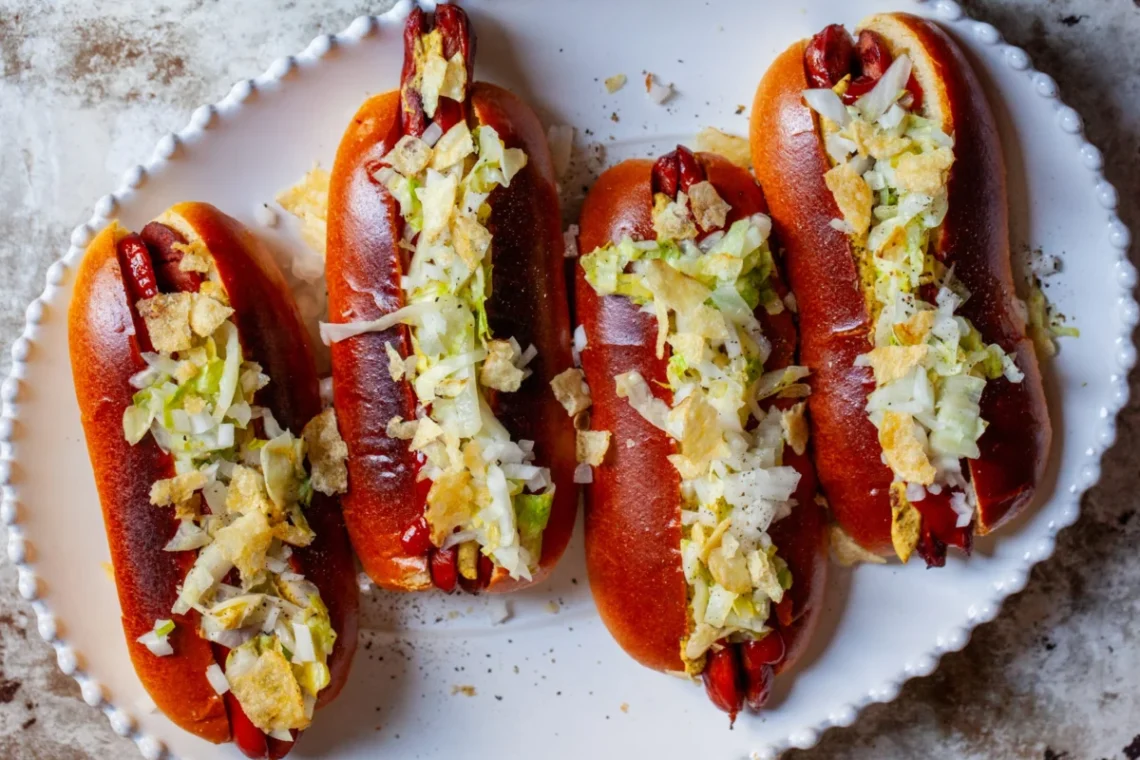
The core of her thesis rests on a triad of elevated techniques: the structural superiority of the butterflied frank, the refreshing and acidic snap of vinegared iceberg lettuce, and the textural counter-balance of crushed potato chips. Published against the backdrop of a punishing heat dome baking the eastern United States, the post serves double duty as both a masterclass in flavor architecture and a timely guide on how to escape grueling outdoor grill stations by utilizing indoor kitchen alternatives. Furthermore, the publication leveraged its wide-reaching platform to direct critical humanitarian aid toward earthquake-ravaged Venezuela through partnerships with Chef José Andrés’s World Central Kitchen.
Chronology: From Latin American Street Food to the Modern American Kitchen
The philosophical evolution of this unconventional hot dog methodology spans decades of global culinary discovery and personal kitchen experimentation:

- Decades Prior: Perelman first encounters the concept of potato chips integrated into handheld street food via a travel documentary highlighting Venezuelan street cuisine—an experience that mentally bridged the gap between her childhood school lunchroom habit of stuffing potato chips into peanut butter and jelly sandwiches and global handheld traditions.
- The Family Tradition: Through domestic exposure, Perelman is introduced to her mother-in-law’s specialty: pickled, or "vinegared," iceberg lettuce. Recognizing its unmatched structural and flavor profile, it becomes a staple garnish in her culinary repertoire.
- The Heat Dome Summer: Facing extreme, triple-digit temperatures across the eastern United States, outdoor grilling becomes an endurance test rather than a pleasure. Perelman synthesizes her preferred methods into a cohesive, indoor-friendly recipe utilizing griddle pans and weight presses.
- The Venezuela Earthquake Crisis: Parallel to the recipe’s digital rollout, twin earthquakes measuring 7.2 and 7.5 magnitude strike Venezuela, leaving catastrophic conditions in their wake and launching emergency search-and-rescue operations.
- Publication and Relief Activation: Smitten Kitchen publishes the hot dog optimization guide, embedding an immediate call-to-action and direct donation link for World Central Kitchen relief efforts on the ground.
Supporting Data: Anatomy of an Optimized Frank
Perelman’s breakdown of hot dog anatomy challenges lazy defaults, relying on mechanical and chemical principles to maximize sensory impact:
- Butterflied Mechanics: By slicing a standard hot dog down its longitudinal axis while leaving the bottom "hinge" intact, the frank opens flat. Cooked cut-side down in a skillet or griddle pan (often aided by a heavy chef’s press for maximum thermal transfer), the surface area exposed to the Maillard reaction increases dramatically. This yields an interior-out crispness and prevents the sausage from rolling awkwardly inside its bun.
- Vinegared Iceberg Chemistry: Traditional hot dog slaws or raw toppings often suffer from high moisture release that makes buns soggy. Marinating shredded iceberg lettuce in a simple solution of water, vinegar, salt, and sugar for anywhere from 30 minutes to 24 hours draws out excess water while impregnating the leaves with a clean, chilled acidity. This cuts through the inherent fat of the hot dog without weighing down the bite.
- Textural Interplay: Moving beyond traditional stale relishes, the inclusion of crumbled kettle chips—or ultra-thin Latin American "potato sticks"—introduces controlled lipid richness and sharp acoustic crunch.
- Thermal Displacement Data: With outdoor summer grilling temperatures frequently exceeding 100°F index ratings, the recipe explicitly validates indoor cooking techniques. Using heavy-bottomed cast iron or griddle pans yields comparable—if not superior—browning control to standard wire grates, preserving home cook morale.
Official Responses and Humanitarian Appeals
While the culinary community frequently debates regional hot dog orthodoxies—such as the fierce Chicago ban on ketchup or the crisp snap of a New York dirty water dog—the broader discourse surrounding Smitten Kitchen’s latest drop quickly pivoted from condiment philosophies to humanitarian mobilization.

Following the catastrophic 7.2 and 7.5 magnitude earthquakes that struck Venezuela, local emergency infrastructure was strained to its absolute limit. In lieu of standard culinary commentary, international relief organizations mobilized swiftly. World Central Kitchen (WCK), renowned for its agile disaster relief model, deployed teams directly into the disaster zones under dangerous, unstable conditions.
Recognizing the platform’s reach, Perelman utilized the recipe post to issue a direct statement regarding the crisis:

"Venezuela was hit by twin earthquakes… and rescue teams are working around the clock under catastrophic conditions to find survivors. If you’d like to help from afar, one of the Smitten Kitchen’s favorite charities, World Central Kitchen, is on the ground serving hot meals to impacted families and first responders, and are requesting donations to help them reach more people faster."
The integration of immediate philanthropic redirection transformed a routine summer comfort food post into a vital channel for international disaster support, driving traffic directly to secure contribution portals.

Implications: Changing the Paradigm of Simple Comfort Food
The publication of this specific hot dog methodology carries several broader implications for modern home cooking, food media, and the psychological relationship people maintain with everyday meals.
First, it democratizes gourmet assembly over pretentious ingredient creation. By explicitly declining to grind meat from scratch—a nod to the absurdity of over-engineering every single element on the plate—Perelman validates the use of commercial, accessible staples (like Hebrew National franks and store-bought potato chips) while elevating them through thoughtful preparation. The lesson is clear: mastery often lies not in making the base component yourself, but in how you treat, cook, and combine the components you choose.

Second, it redefines seasonal comfort cooking. As global climate shifts bring increasingly severe summer heat domes, traditional outdoor grilling is frequently untenable or physically punishing. By championing indoor griddle techniques, heavy kitchen weights, and temperature-defying chilled toppings like vinegared iceberg lettuce, food creators are guiding home cooks toward climate-resilient meal planning. Cooking can—and should—adapt to environmental realities without sacrificing sensory pleasure.
Finally, the seamless blending of lighthearted domestic content with urgent global philanthropy underscores the interconnected nature of digital publishing. In an era where food blogs serve as daily sanctuaries for millions of readers seeking escape or comfort, utilizing that trusted space to channel resources toward international humanitarian crises like the Venezuelan earthquake relief demonstrates a mature, socially responsible approach to lifestyle journalism. The ultimate takeaway is multifaceted: cook smarter indoors, respect the crunch of vinegared greens, and never underestimate the power of a community mobilized around a shared table.